The Falkland Islands
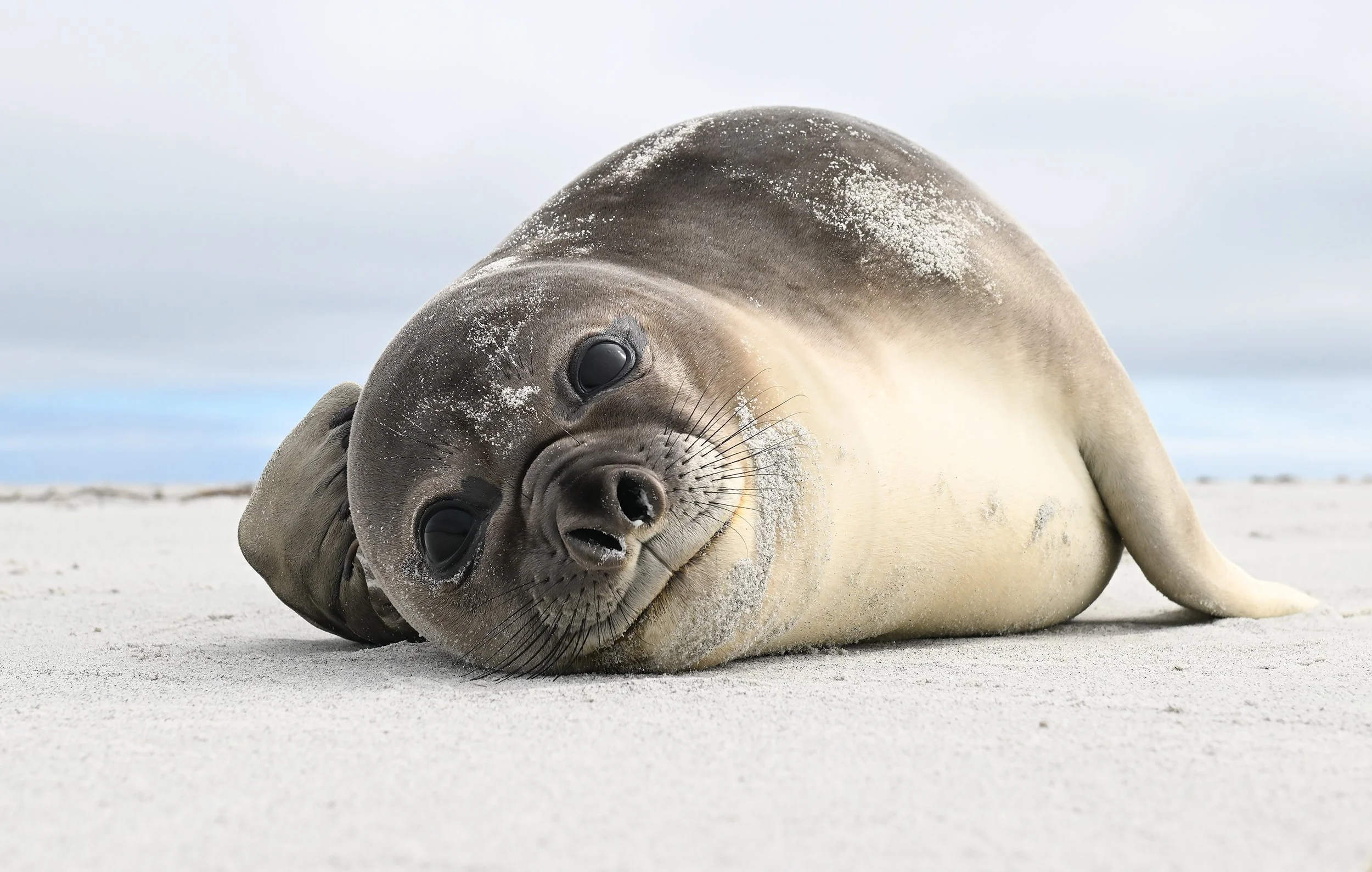
Southern elephant seal pup – Sea Lion Island
This magical archipelago sits in the wild throws of the Southern Atlantic – rugged, treeless, windswept and wave-battered. The Falklands may not be the obvious choice for every wildlife photographer while South Georgia and the Antarctic are relatively ‘nearby’, promising stunning landscapes and a wildlife bonanza – but the Falklands absolutely MUST be on your bucket list! The islands harbour much of the iconic Antarctic wildlife – penguins, whales, orca, seals, albatross – but with fewer visitors and far more freedom to explore.
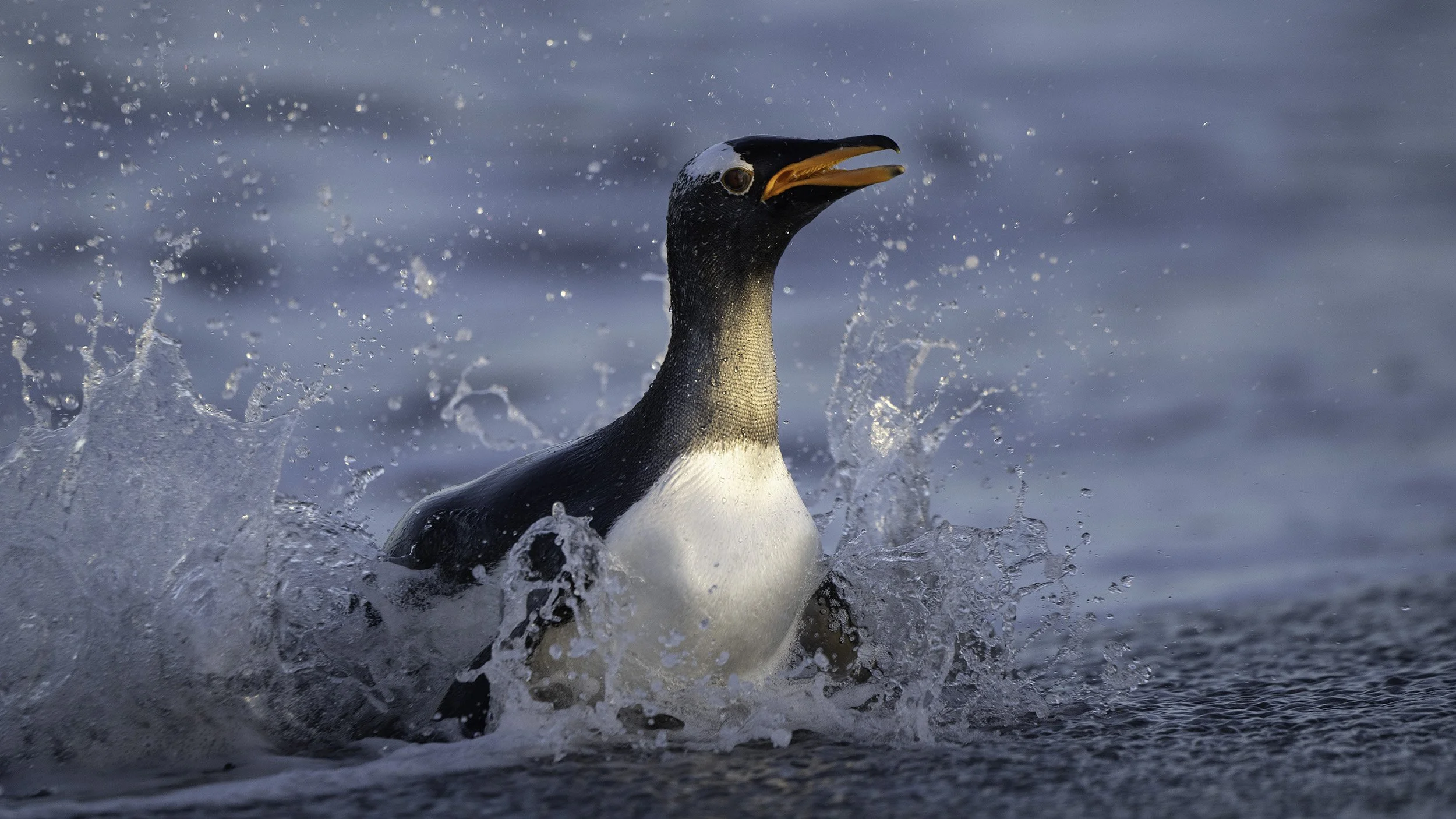
Gentoo – Sea Lion Island
I was lucky enough to first visit these islands back in 2020. While the UK was swinging between lockdown and eat-out-to-help-out, I was sent out on my first international shoot for Netflix’s Our Planet 2 to film orca hunting elephant seal pups. After twenty hours on the MOD flight down from Brize Norton – the only route open during covid times – myself and my colleagues spent two weeks quarantining in Stanley – the main town on the islands. After three visits from the local nurse to swab us, we were given the all clear and flew on the tiny FIGAS plane alongside pilot Tom to Sea Lion Island in the south of the archipelago. I sat in the cockpit and couldn’t believe my eyes as we travelled over vast kelp forests, white sand beaches and turquoise waters.
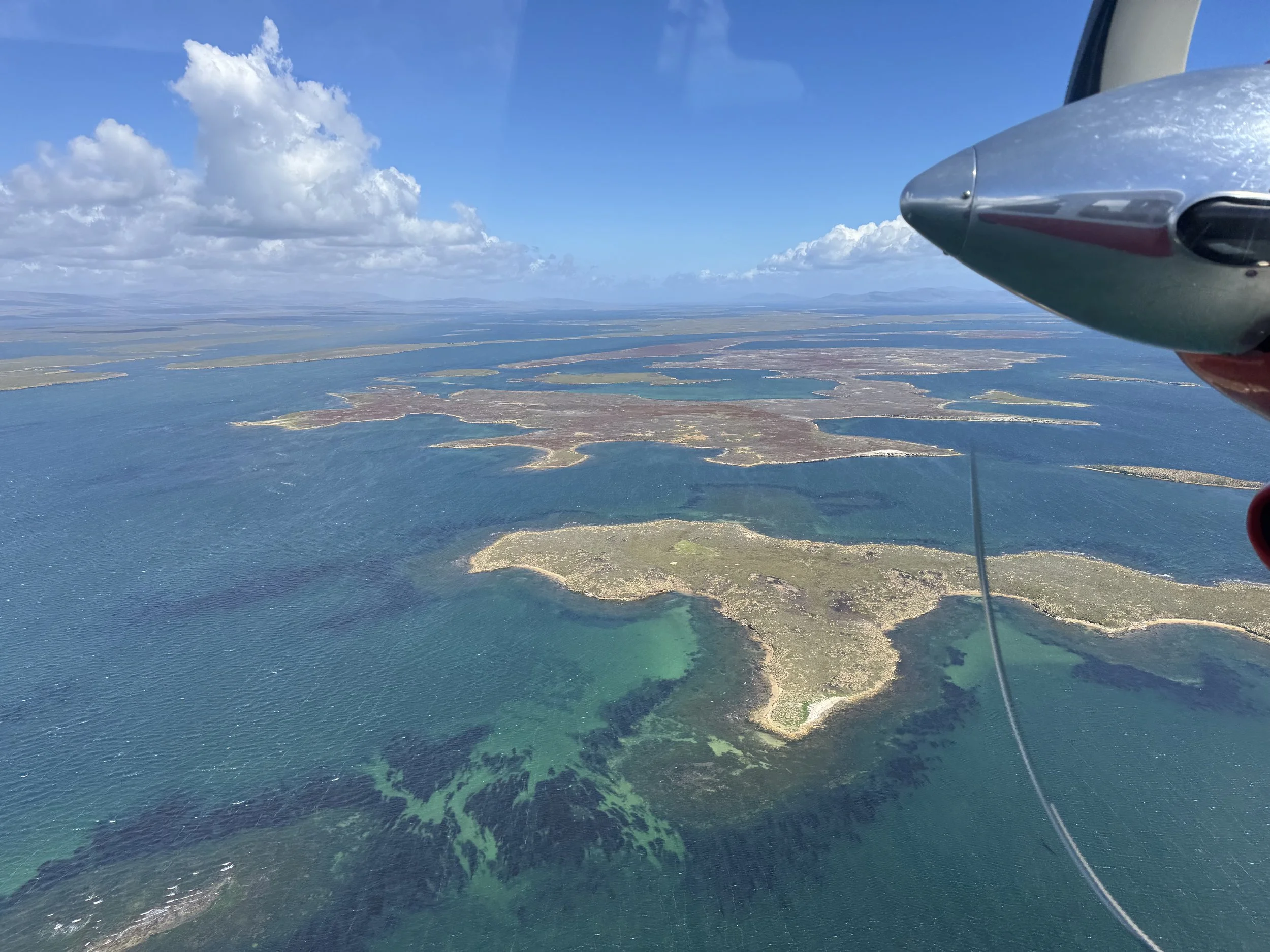
View from FIGAS plane
Arriving at Sea Lion we were greeted by Micky Reeves, who runs the lodge and takes care of the island alongside his partner Sarah – usually the lodge is fully booked years in advance, but due to the global pandemic somewhat limiting travel, we were able to be housed there for the whole shoot and enjoyed the awesome hospitality of Micky and his team, including Falkland Islands gin! The shoot was the most special experience, watching the elephant seal pups grow up before my eyes, face the trials brought by the ingenious orca Puma and her family and to be surrounded by penguins, petrels and curious Johnny rooks that had no fear of me. Not to mention some of the most stunning sunrises of my life.
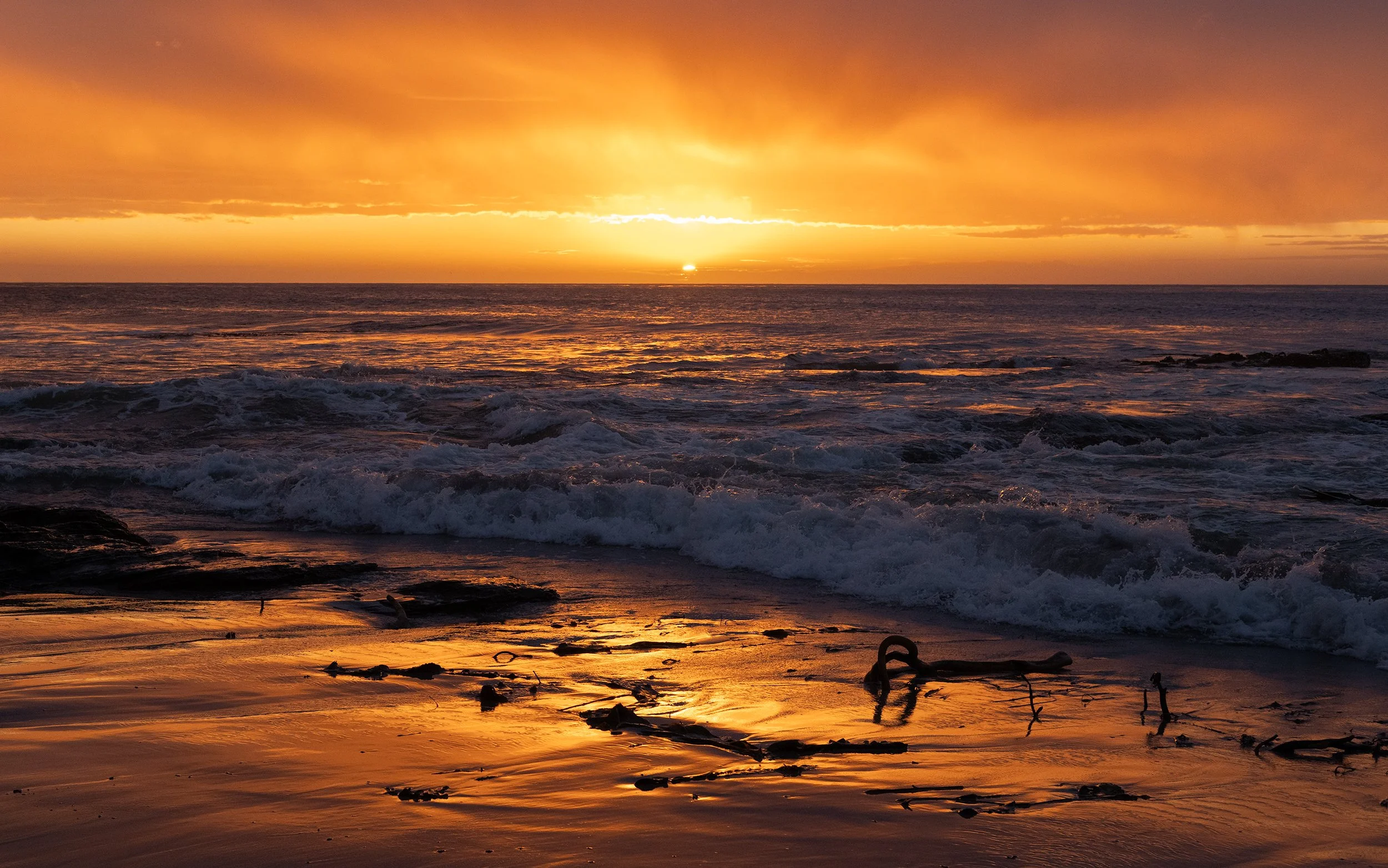
Sunrise – Sea Lion Island
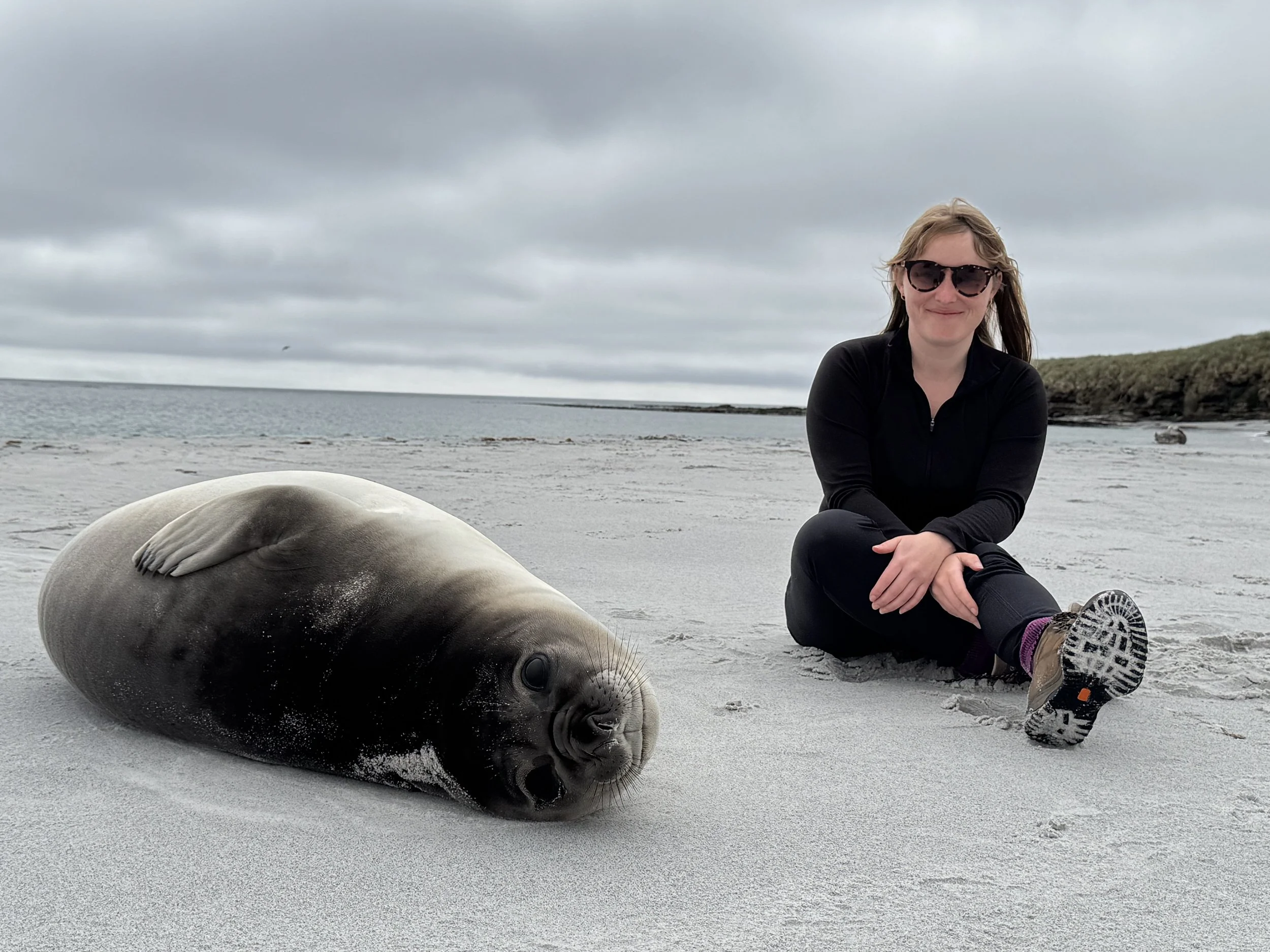
My elephant seal friend – Sea Lion Island
Working in wildlife film no doubt gives the most incredible opportunities to travel and experience new places, often those that few other people get to venture to. But leaving the Falklands I couldn’t help but think I’d only scratched the surface with my one visit to Sea Lion Island. Safe to say my parents, also keen wildlife photographers, were extremely jealous. Five years later they decided it was time to take a trip down south too. I cheekily invited myself, knowing I couldn’t pass up a chance to go back to one of my favourite places on Earth, to explore more of the islands and to show my family where my wildlife film career had begun.
In November 2025 the three of us set off – we chose the long route this time flying via Santiago and Punta Arenas in Chile. For those of you hoping to travel to the islands, choose your route carefully: the MOD flight offers a direct option from Brize Norton, but it comes with a risk – if the winds aren’t right at the Falklands end they may close the airport and the plane will be turned around, wasting 40 hours of your life and not-so-promptly dumping you back in Brize Norton where you started. The MUCH slower (but safer) route via Chile allows you to get all the way to Punta Arenas, and if the winds are wrong you’ll only have lost a little time before you can try again. Plus, Punta Arenas is the Chilean gateway to Patagonia, promising stunning landscapes, condors and puma photography if you fancy an extra stop.
Some housekeeping travel bits for organising your trip – Falkland Islands Holidays are an excellent company who can help you arrange your itinerary and your travel whilst in the islands, including getting from the international airport to Stanley. It’s important to know you must have accommodation booked before you arrive at the airport, or you may be turned away and sent back on the plane home. We witnessed one unfortunate couple pleading with MOD officials as they’d decided to turn up and wing it – it’s not Bali sorry guys! There are limited spots to stay in the Falklands, and that’s what’s so fantastic, there are few visitors and the wilderness still feels wild.
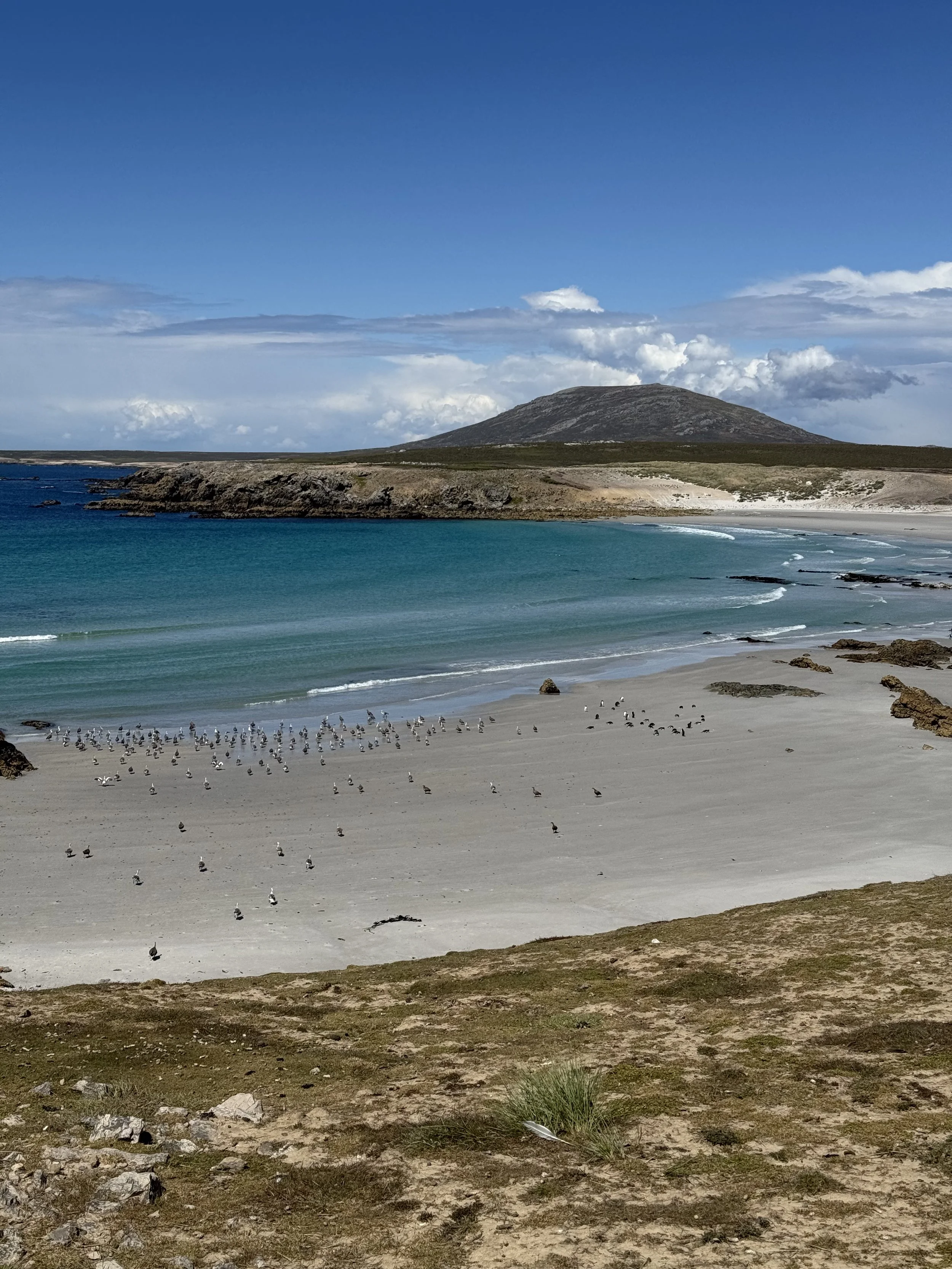
Pebble Island
In Stanley most people stay at The Malvina House Hotel, from which you can explore the town, go on day trips or rest before transfers to other islands. We visited the nearby Yorke Bay – a beautiful white sand beach with plenty of birds to whet your appetite and get your eye in before visiting the islands. Falkland Islands Holidays did a wonderful job putting together an itinerary to explore multiple islands, including booking our accommodation and transfers. Despite frequent flight changes due to weather, our inter-island travel was smooth as we were accompanied by one of the FIH reps – it was extra handy that she got early updates from her brother the pilot!
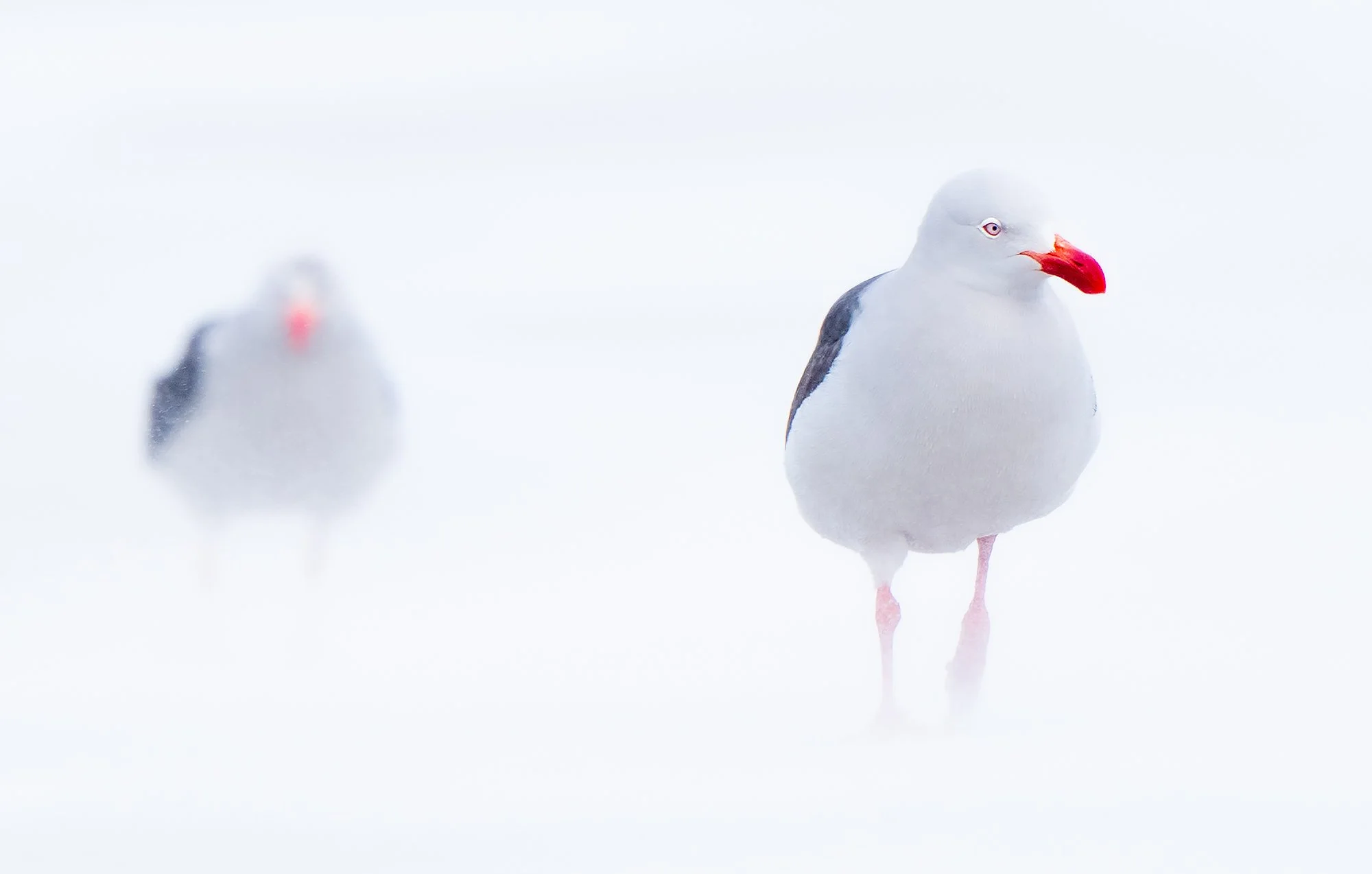
Dolphin gulls – Yorke Bay
The internal flights are amazing experiences in their own right – in a tiny plane with a guaranteed window seat (or indeed the cockpit) and only a few other passengers, you get incredible views of the islands’ landscapes. We even spotted sei whales’ blows as we crossed the sea on our way!
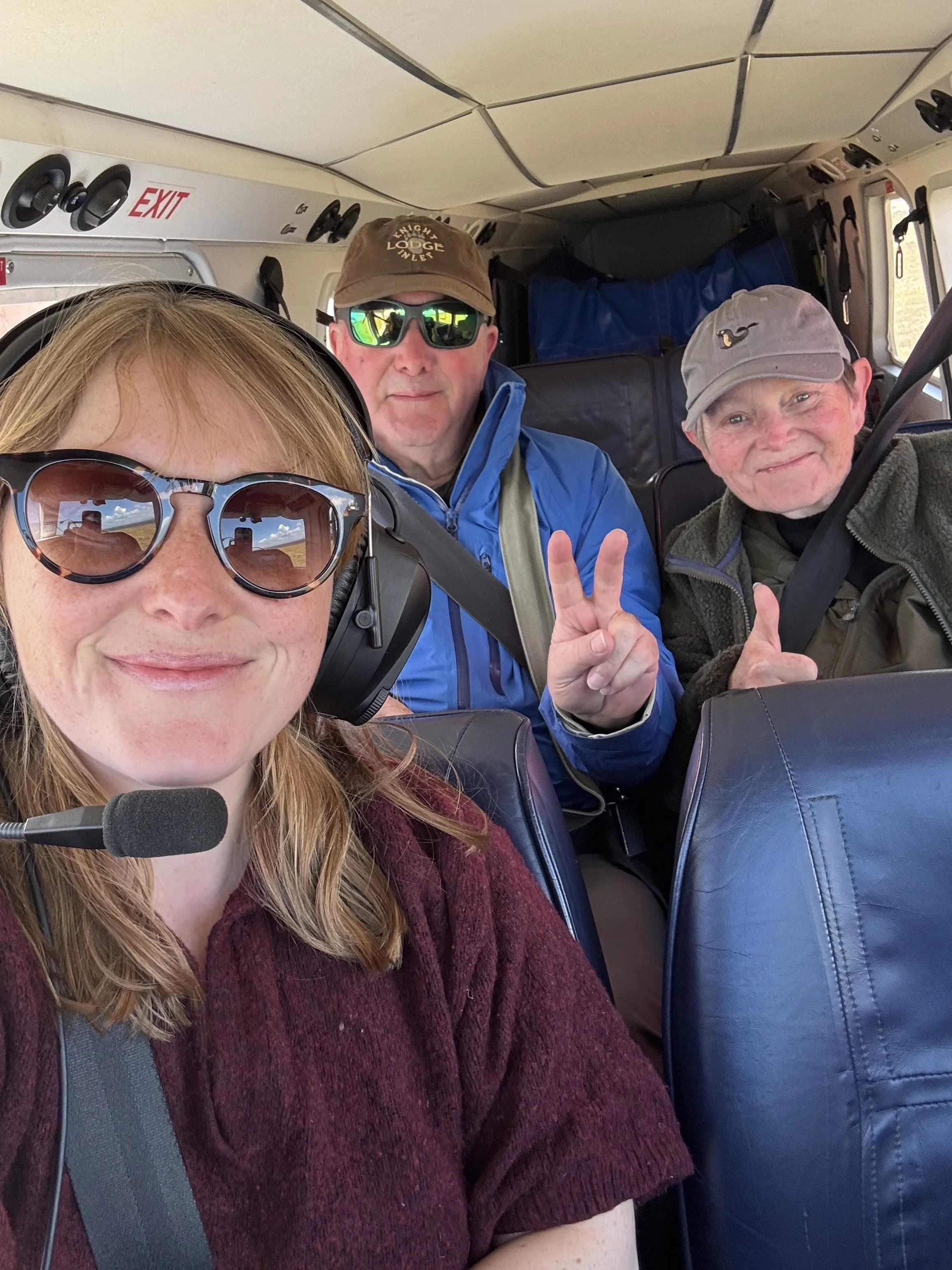
Family onboard
Our first stop was to Pebble Island where we landed and were greeted by the lovely Rikki Evans and his team who run the lodge there. The lodge and the nearby working sheep farm are the epicentre of the island, which is largely uninhabited.
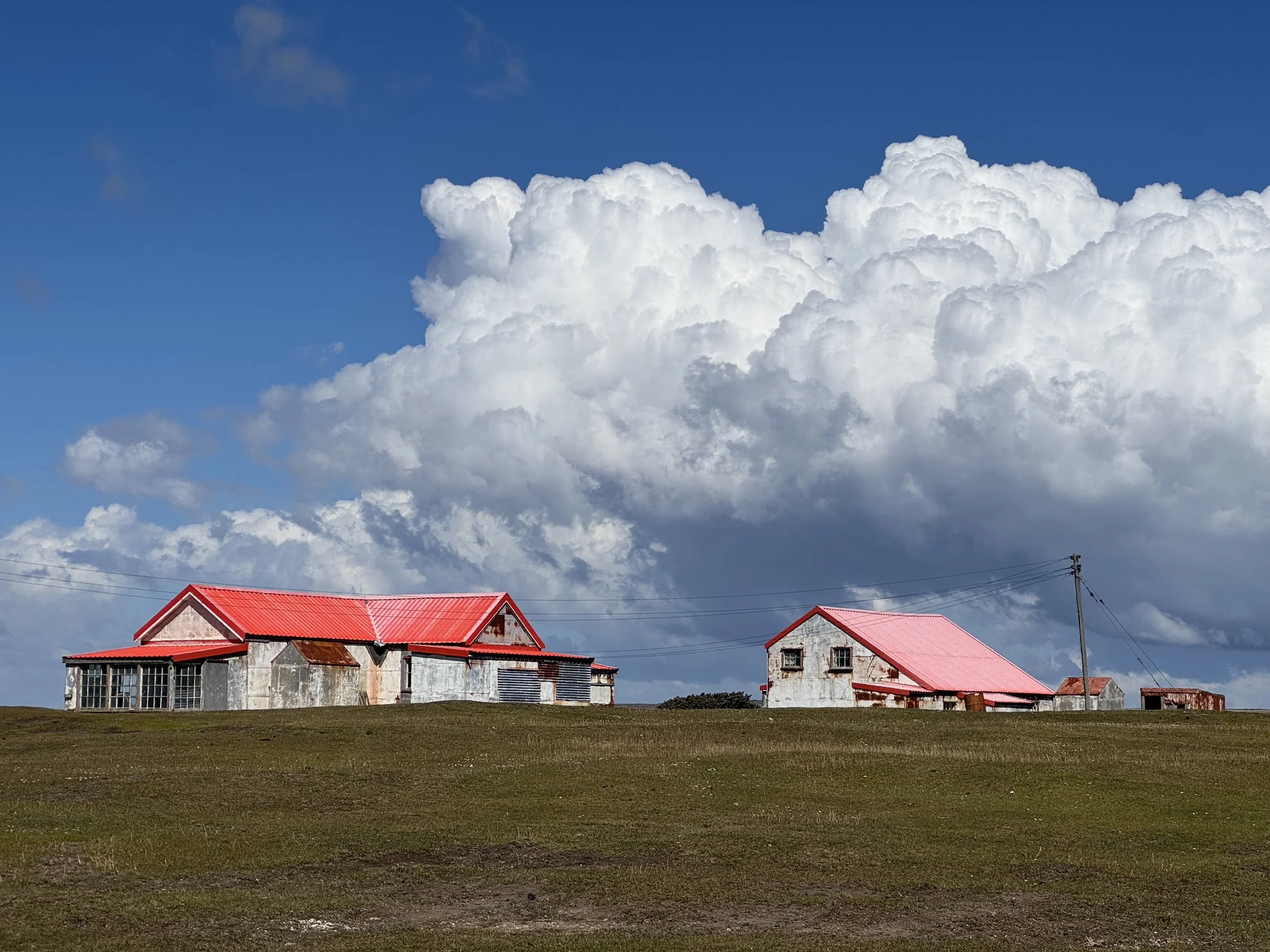
Settlement on Pebble Island
The routine on Pebble is to organise with Rikki the day before where you want to go the following day, and one of the lodge team will drop you off for the day in a 4×4, or you can walk from the lodge itself. By the looks of the map the best wildlife opportunities were to be had in the east or west ends of the islands, so we spent one day at each. I highly recommend exploring the east end around Cape Evans where you can see rockhopper penguin and imperial shag colonies on the impressively tall and rugged northern cliffs, and a short walk away the gentoos on the lower ground to the south.
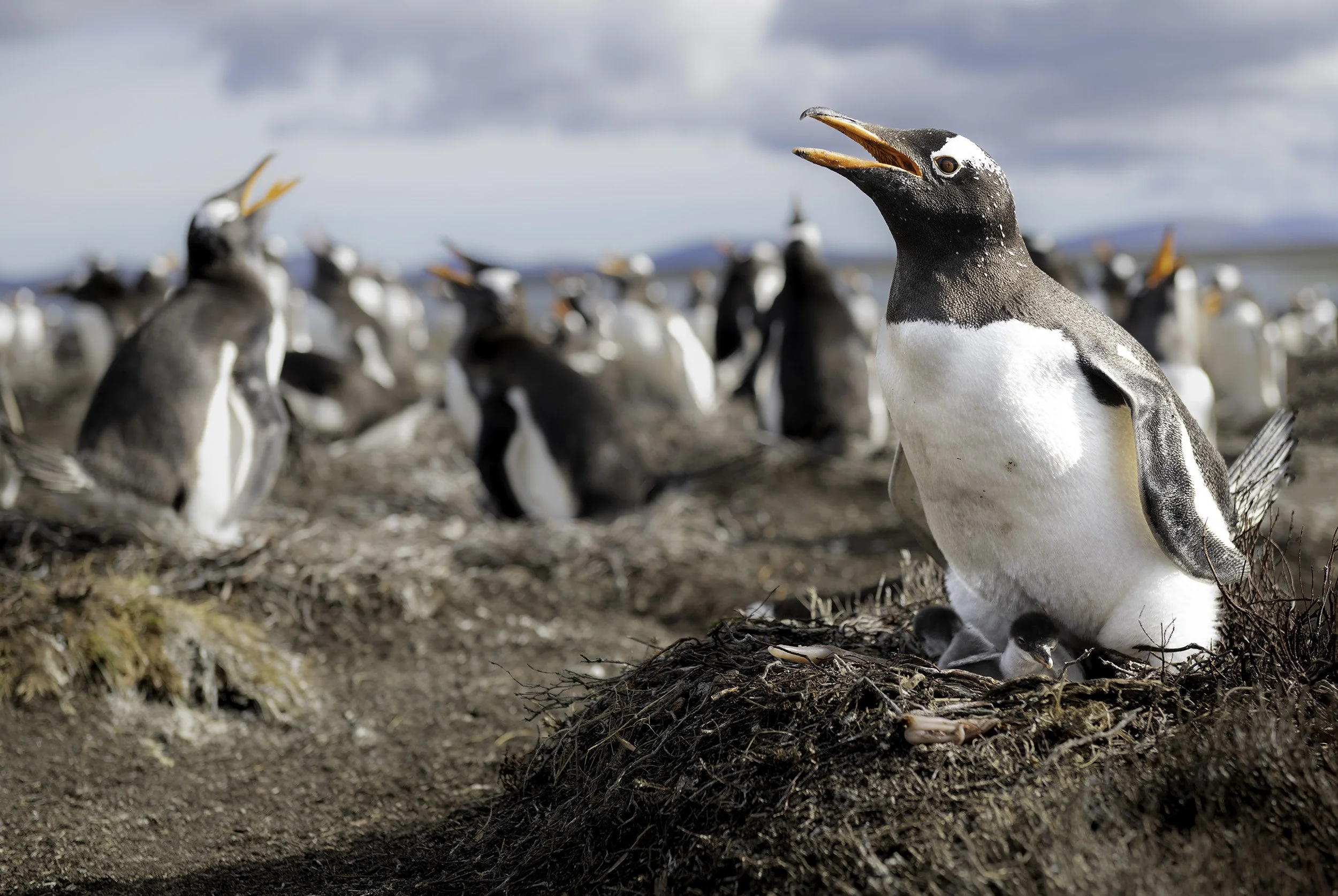
Gentoo colony – Pebble Island
The absolute beauty of the Falklands became clear on this first day – we were dropped off in the morning after breakfast, just the three of us, and asked when we would like to be picked up – “5?” we said! And that was it – we were alone, save the thousands of seabirds and penguins, and free to explore to our hearts’ content. While visiting destinations like the Galapagos and Antarctica can feel like you’re being herded along paths and there are parades of zodiacs dropping off passengers like clockwork, the Falklands couldn’t feel wilder or more untouched. It’s just you and the wildlife, sometimes going a whole day without running into another soul. I felt totally at peace snapping away for hours, watching the comings and goings of the rockhopper colony up and down the cliffs, and with a cacophony of sound and the overwhelming smell of seabirds a welcome assault on the senses. I even had a southern caracara (or Johnny rook as they’re known in the islands) come to steal my lens cap and rucksack whilst I ate my lunch – a common occurrence with these curious, cheeky falcons.
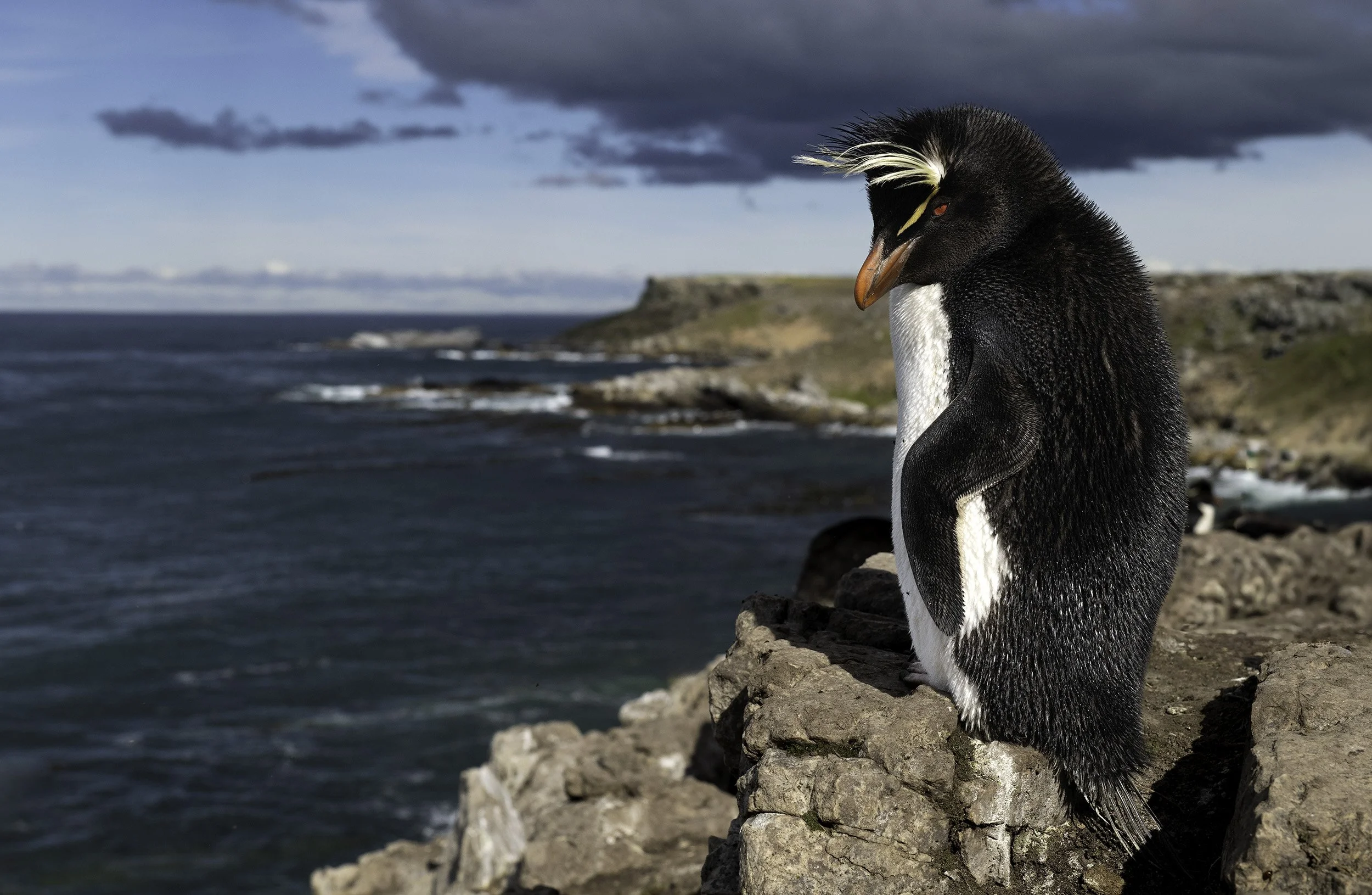
Rockhopper cliffs – Pebble Island
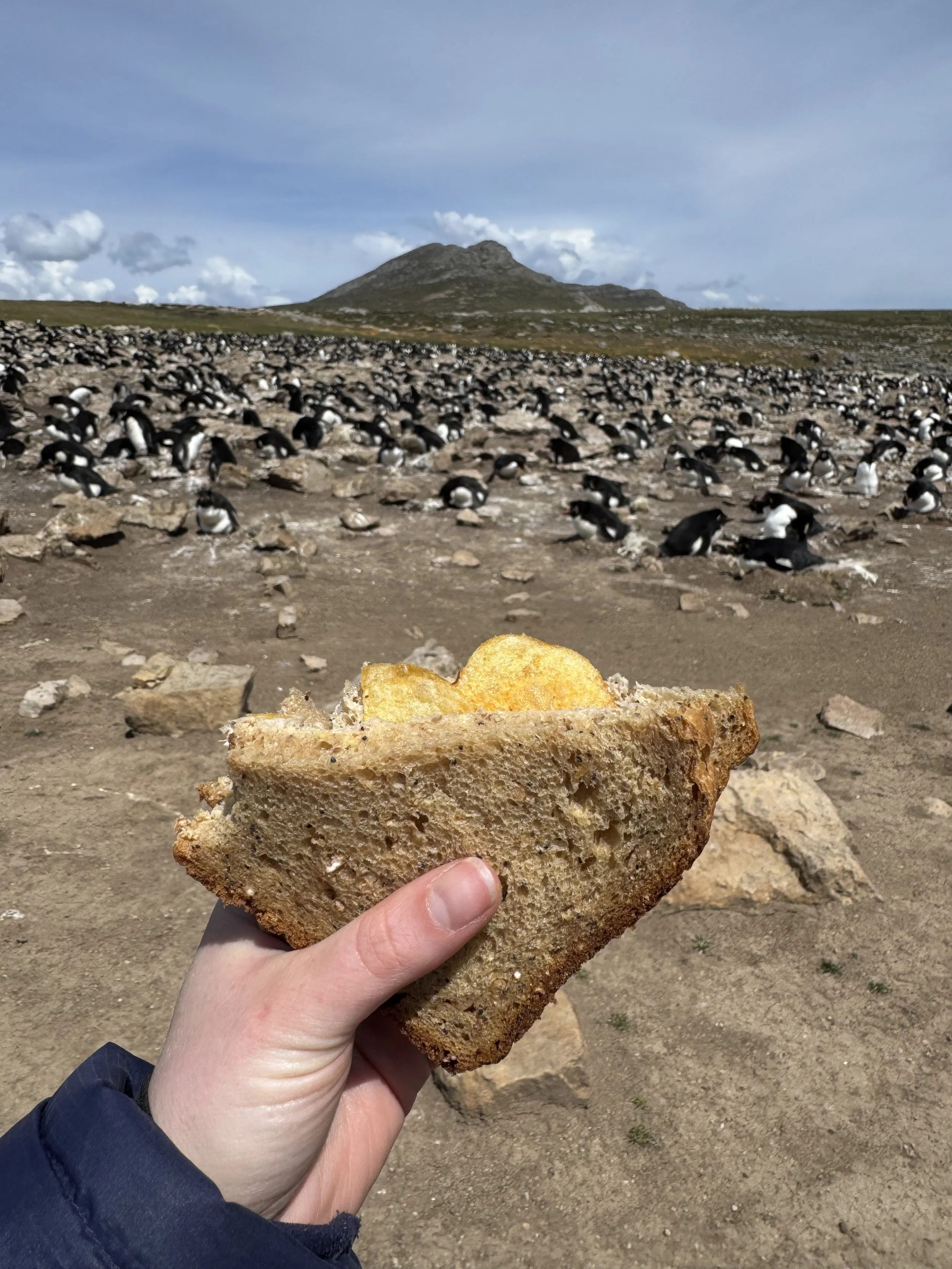
Lunch with the rockhoppers
Day two on Pebble brought even more joy and wonder. On our way to our drop off point at Cape Coventry, we were sidetracked by a spectacle I’d been eagerly anticipating and hoping for; as we drove along the white sand of Stinker Beach we stopped the guide and got out to see a pod of Commerson’s dolphins surfing and playing in the waves. They were just metres from the shore, speeding through every wave and leaping out the back in formation. We were loath to move on from such an incredible sight, but the guide assured us they’d be here all day – during this time of the year they come most days to this beach simply to play and socialise. So we moved on and got dropped off at the rockhopper colony. Here, a little lost perhaps, was a macaroni penguin; he was raising a little hybrid chick with his rockhopper partner.
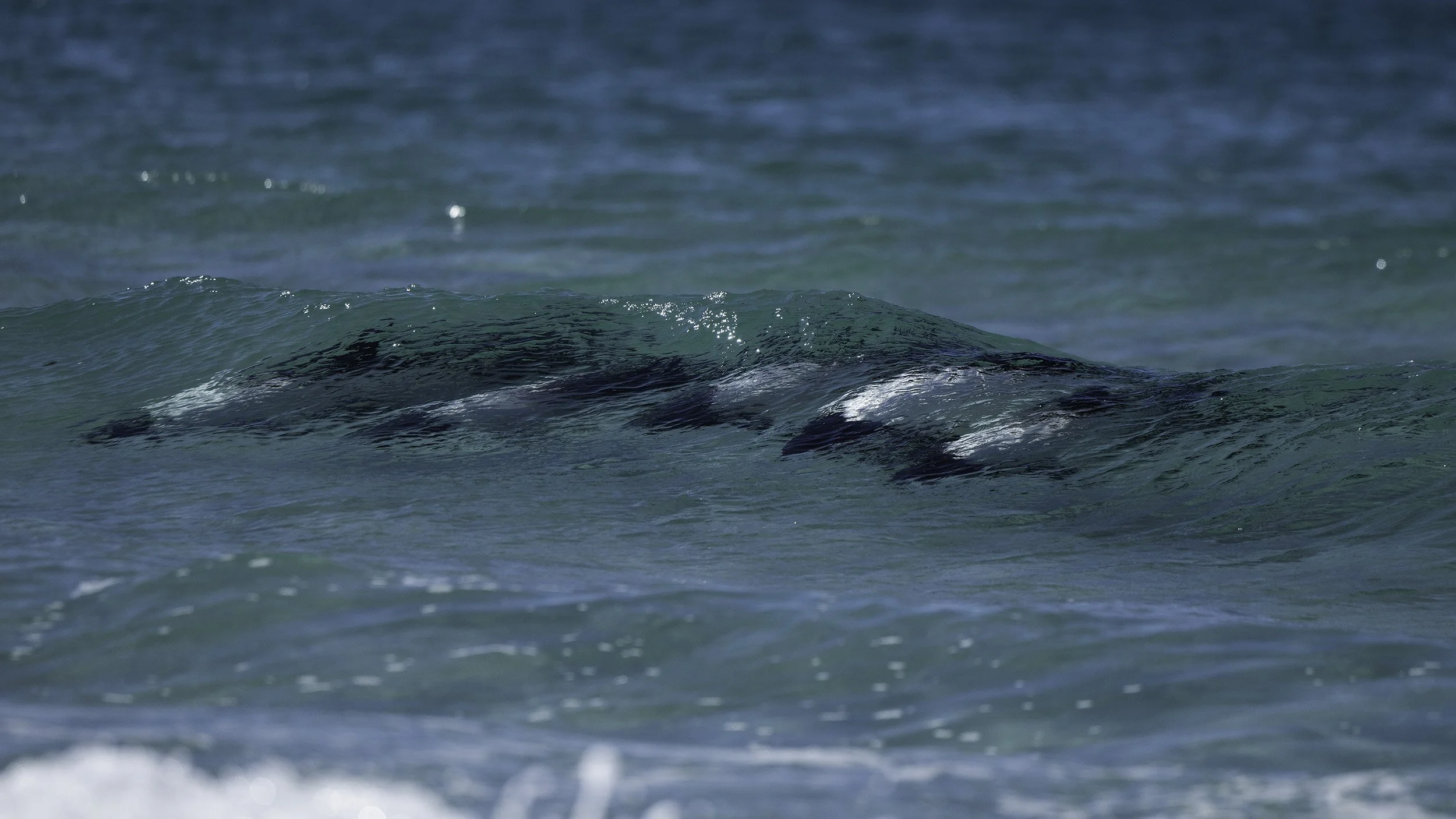
Commerson’s dolphins – Stinker Beach
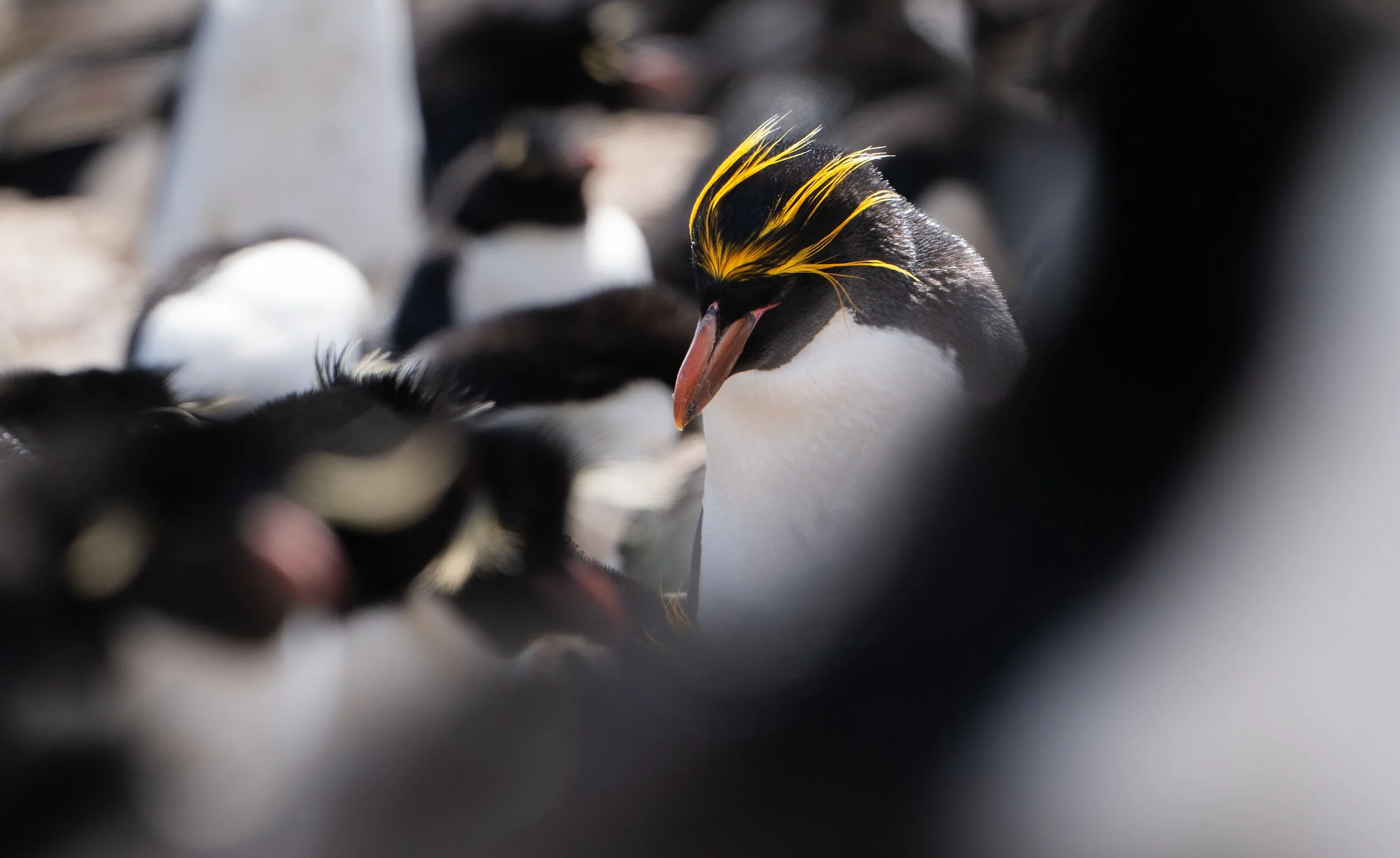
Macaroni penguin – Pebble Island
Down at the base of the cliffs we saw rockhoppers splashing and socialising in a little sea pool sheltered from the waves – a final dip before heading up the cliff to the colony and the never-ending begging of their young chicks.
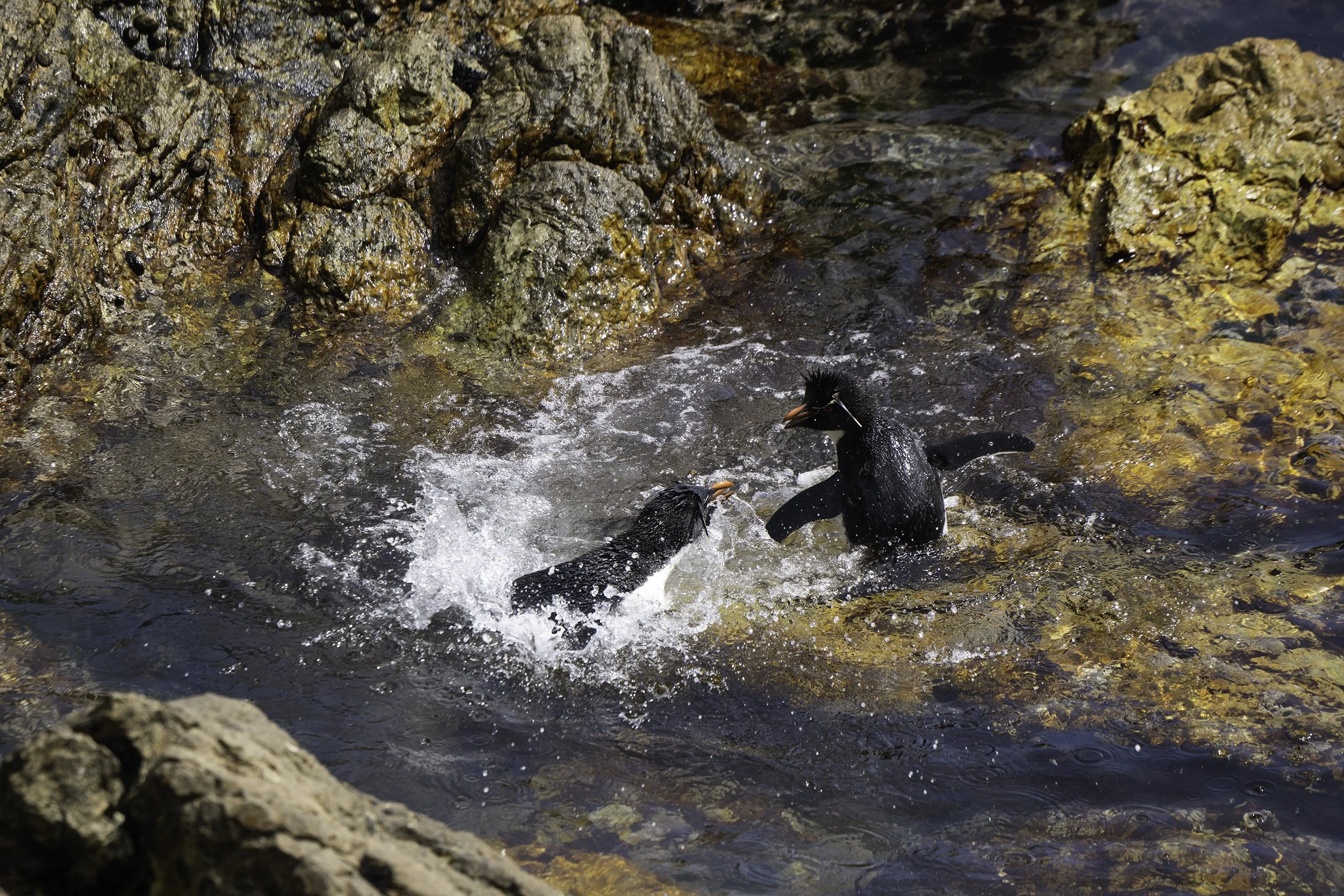
Rockhopper play pool – Pebble Island
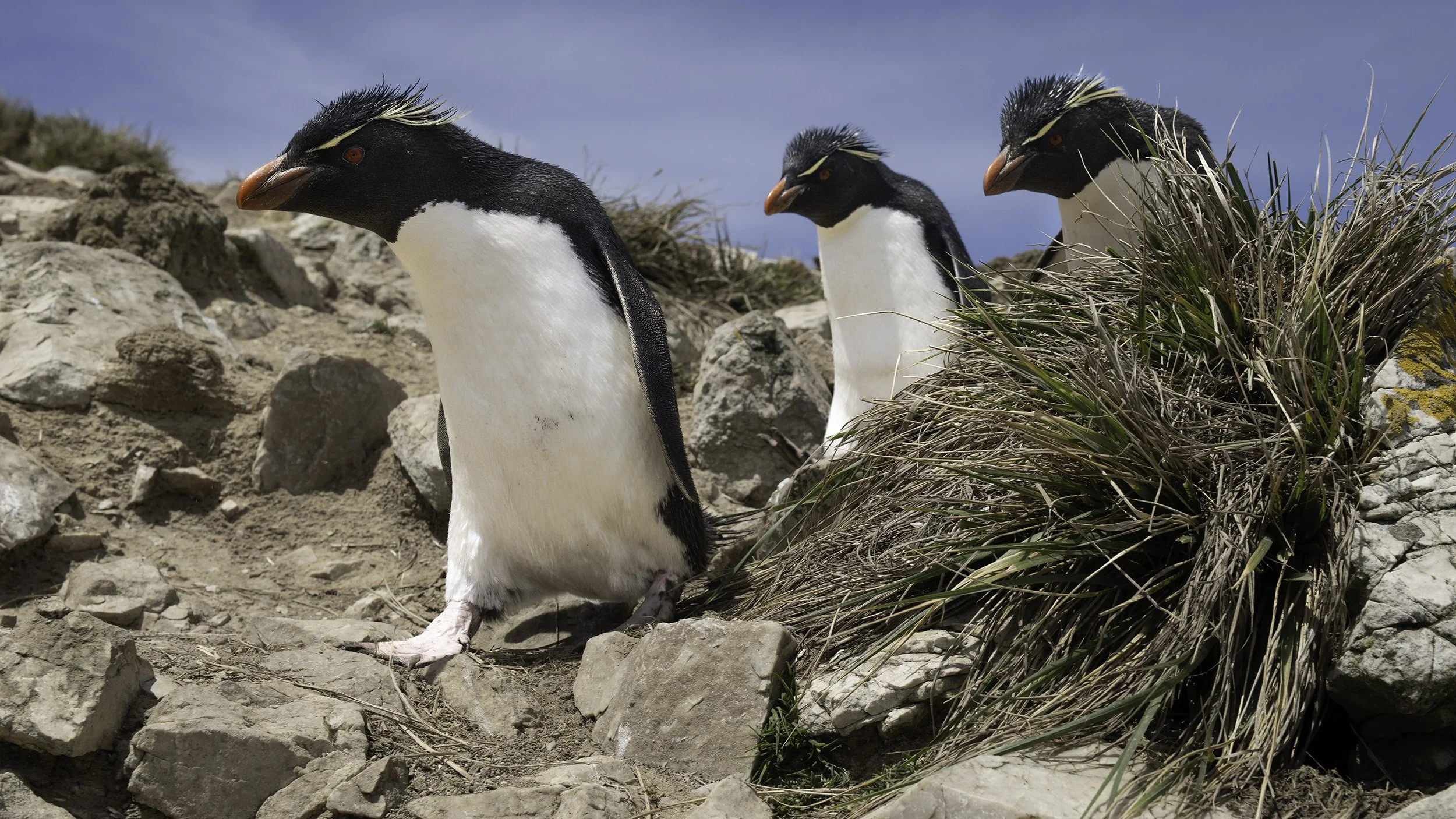
Rockhoppers headed to sea – Pebble Island
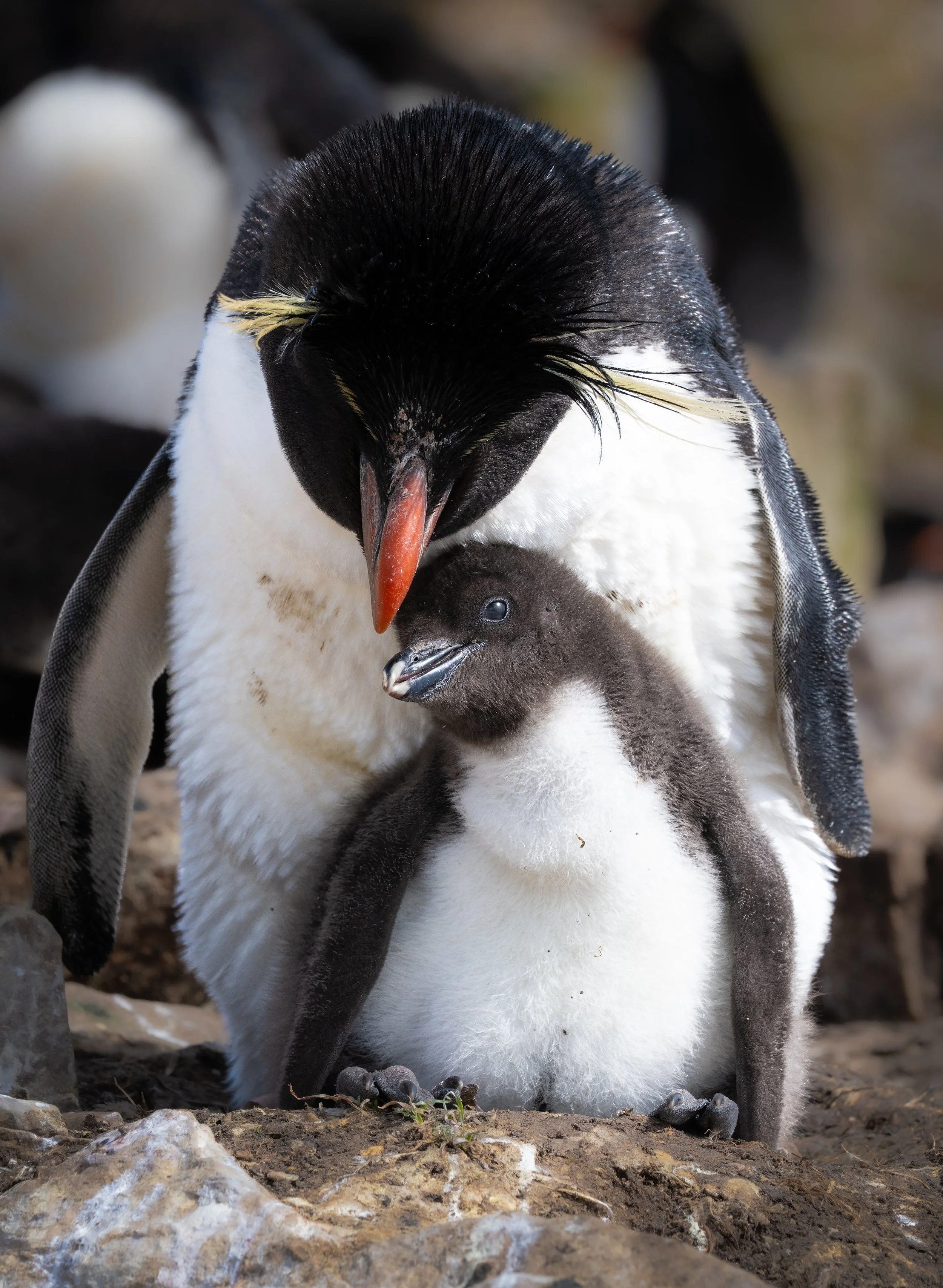
Rockhopper chick – Pebble Island
Walking from the rockhopper colony took us on a beautiful route, past magellanic and gentoo penguins, and terrestrial birds like the rufous-chested dotterel.
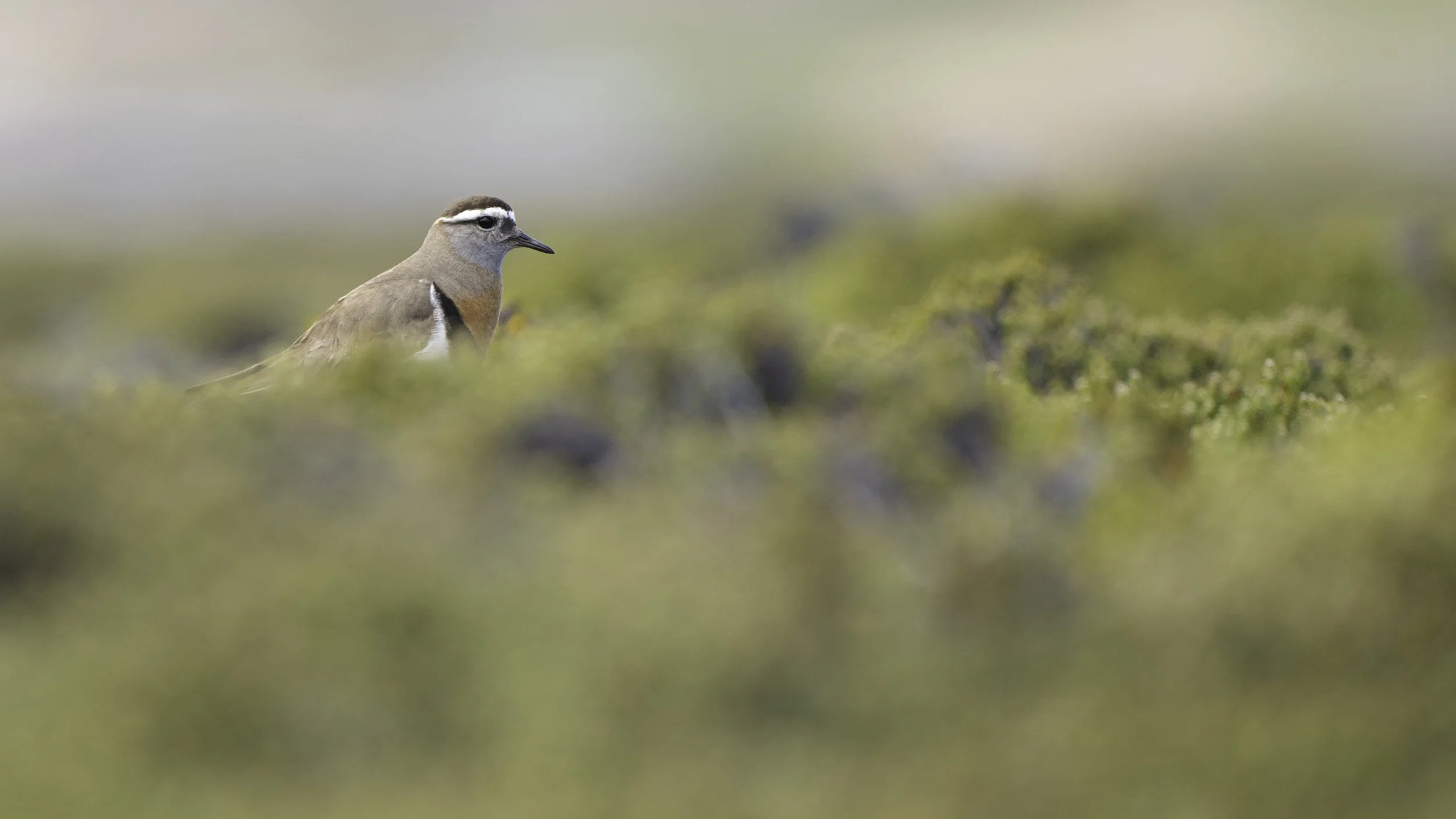
Rufous-chested dotterel – Pebble Island
We ventured around the coast and into the beautiful Berntsen Bay before getting back to Stinker Beach in the afternoon, where we obviously spent several more hours watching the pure joy of the dolphins playing. It had been one of the most fulfilling days spent in nature ever! Dad, who had grumbled about there being no wildlife in the west except more bloody gentoos, had to eat his words and agree it had been incredible!
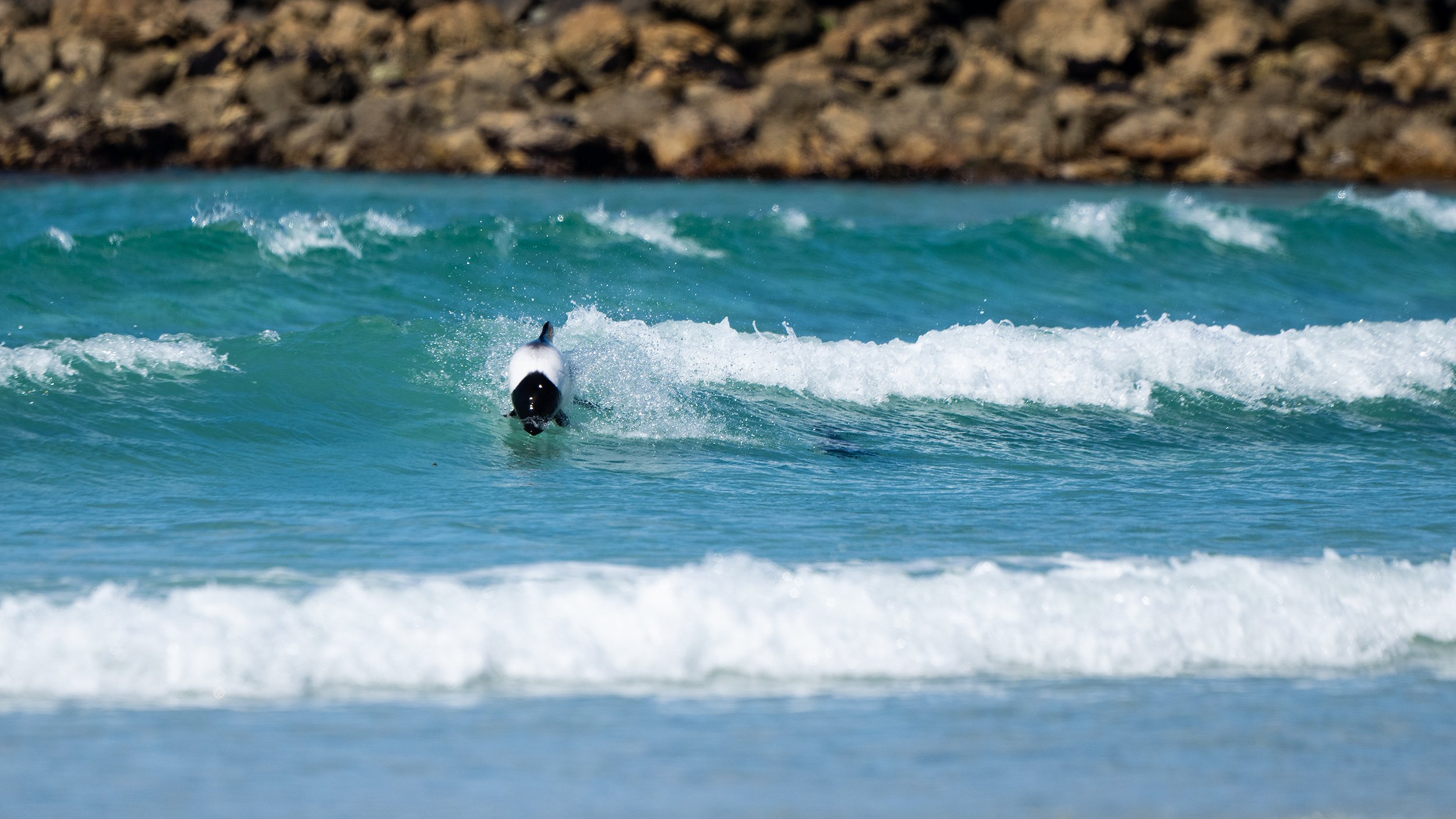
Commerson’s dolphin – Stinker Beach
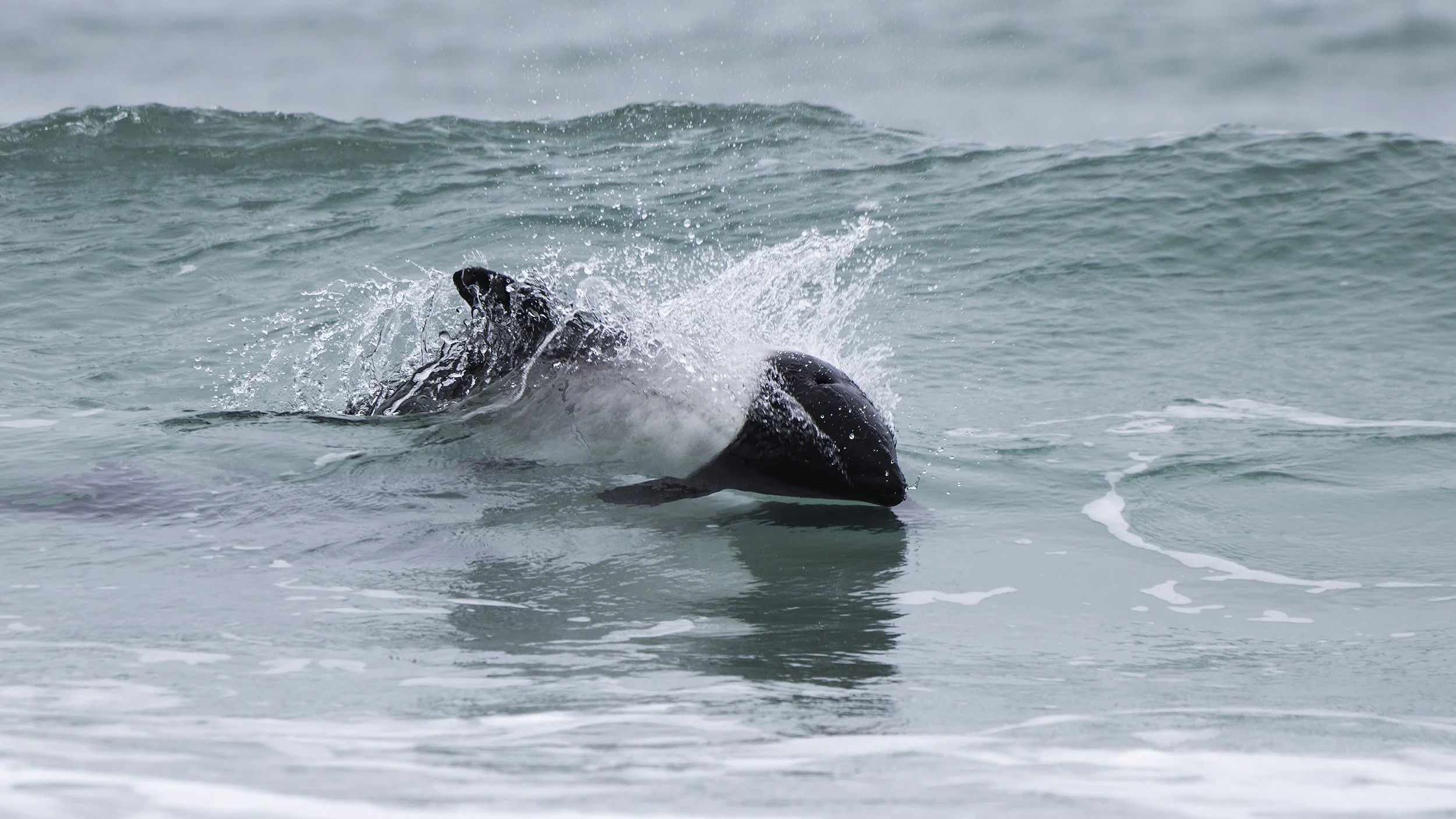
Commerson’s dolphin – Stinker Beach
After a fantastic stay on Pebble, we moved onto our next destination – one I’d been very excited to return to: Sea Lion Island. It was a strange but wonderful experience to land on the same island I’d been to five years before, and to see Micky and his team again.
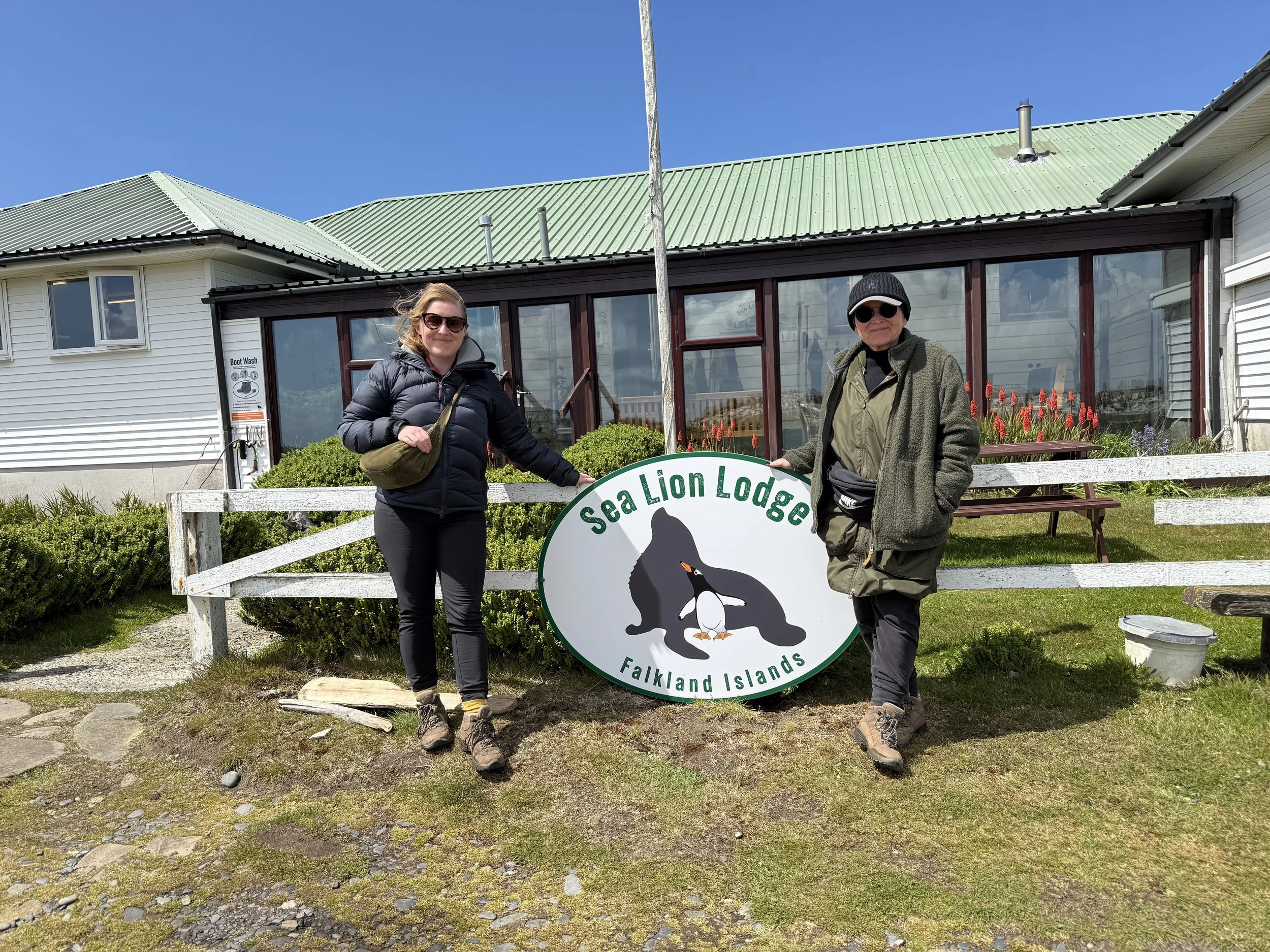
Mum and I at Sea Lion Lodge
This time I was armed with all the knowledge to guide my parents around the island, and we had the best time. If you visit, you must visit North beach to see gentoos returning from fishing in groups and gathering en masse at sunset before returning to their colony. It’s tricky but excellent fun trying to catch them as they leap from the water.
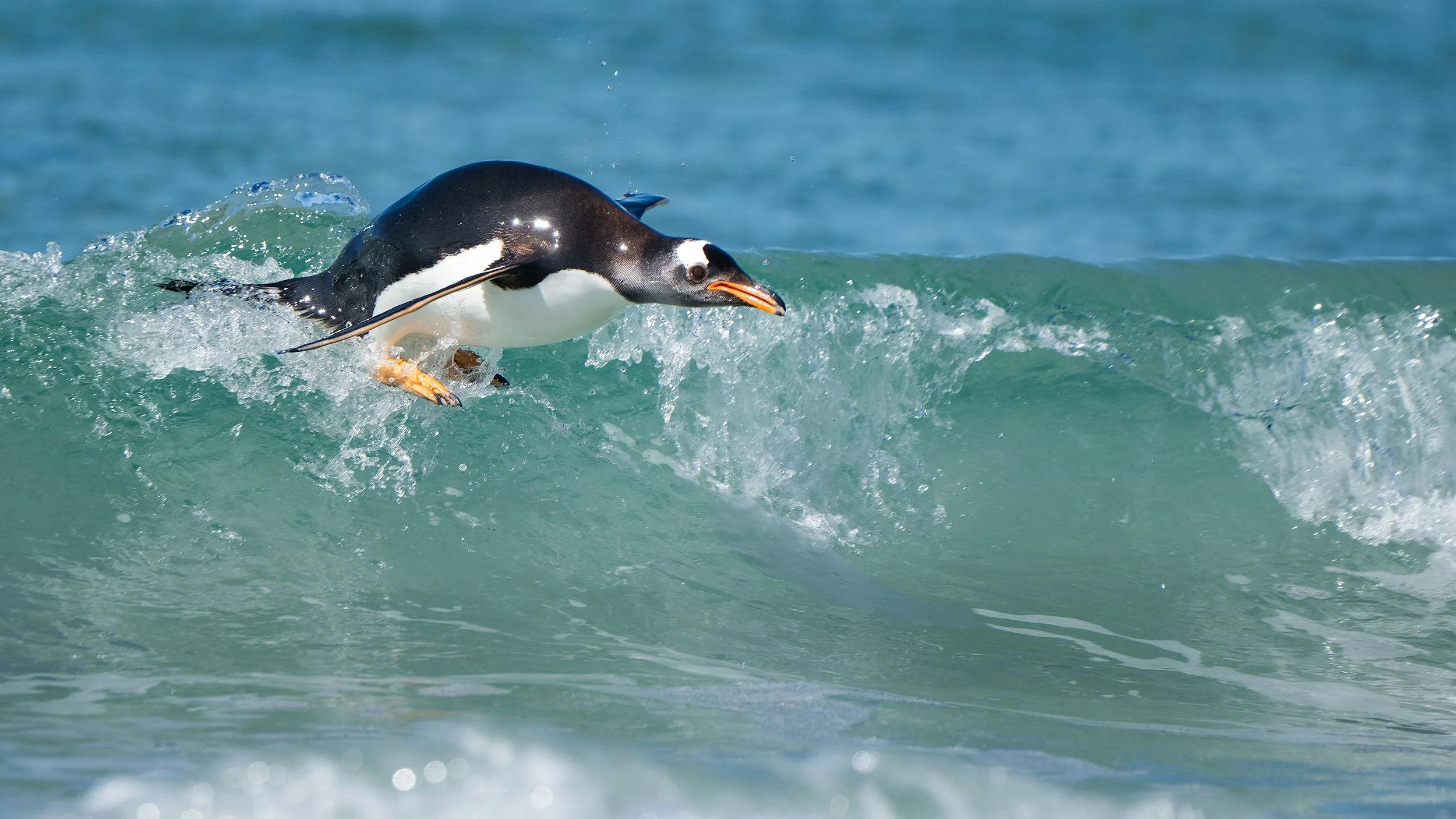
Surfing Gentoo – Sea Lion Island
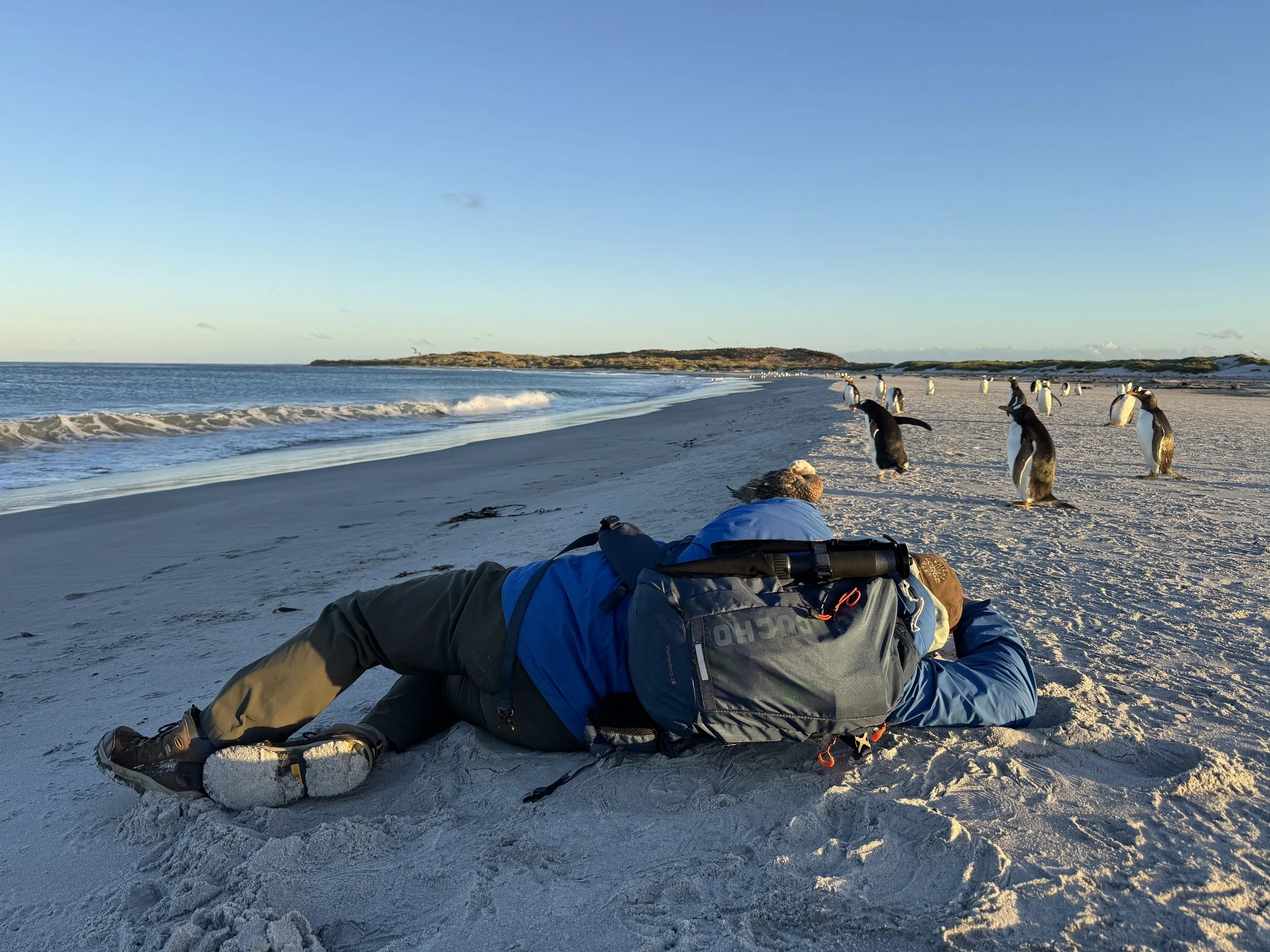
Dad on North Beach – Sea Lion Island
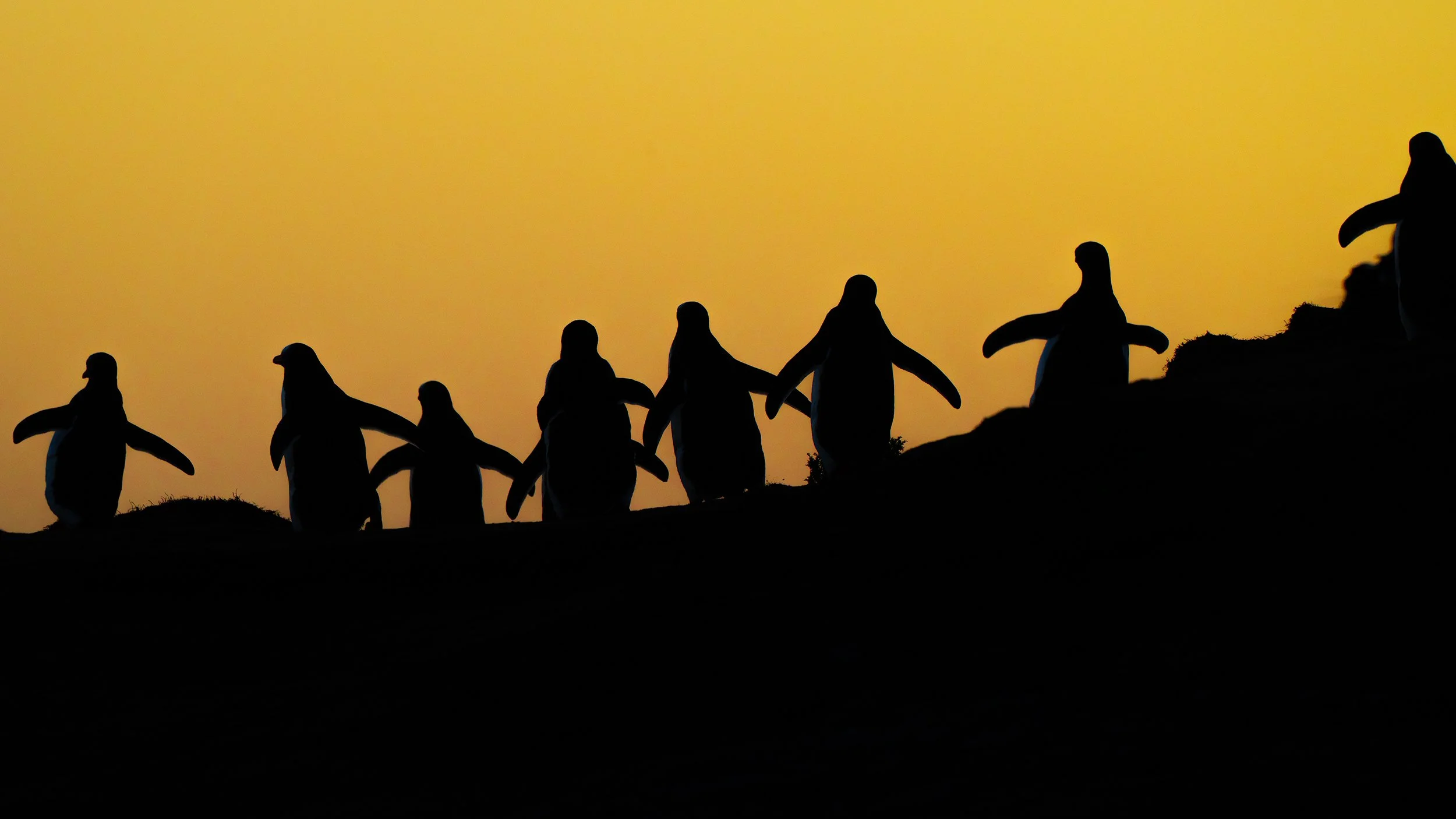
Gentoos Sunset – Sea Lion Island
Our preferred time to visit South beach was for sunrise – you get the most beautiful light there first thing over the elephant seal colony, and the weanlings are most active through the night and early morning, using the various pools to socialise and learn to swim.
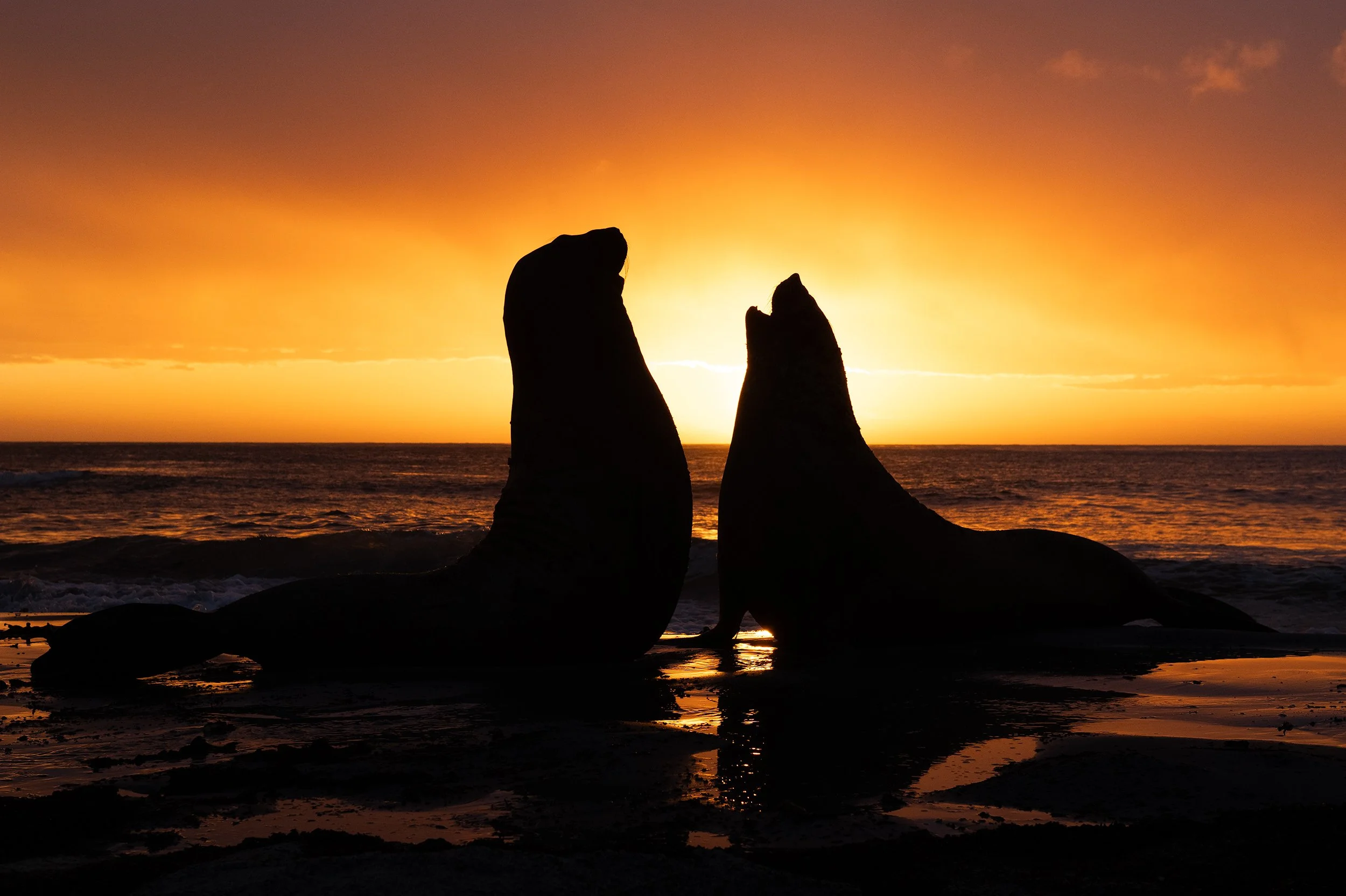
Elephant seals play fighting – Sea Lion Island
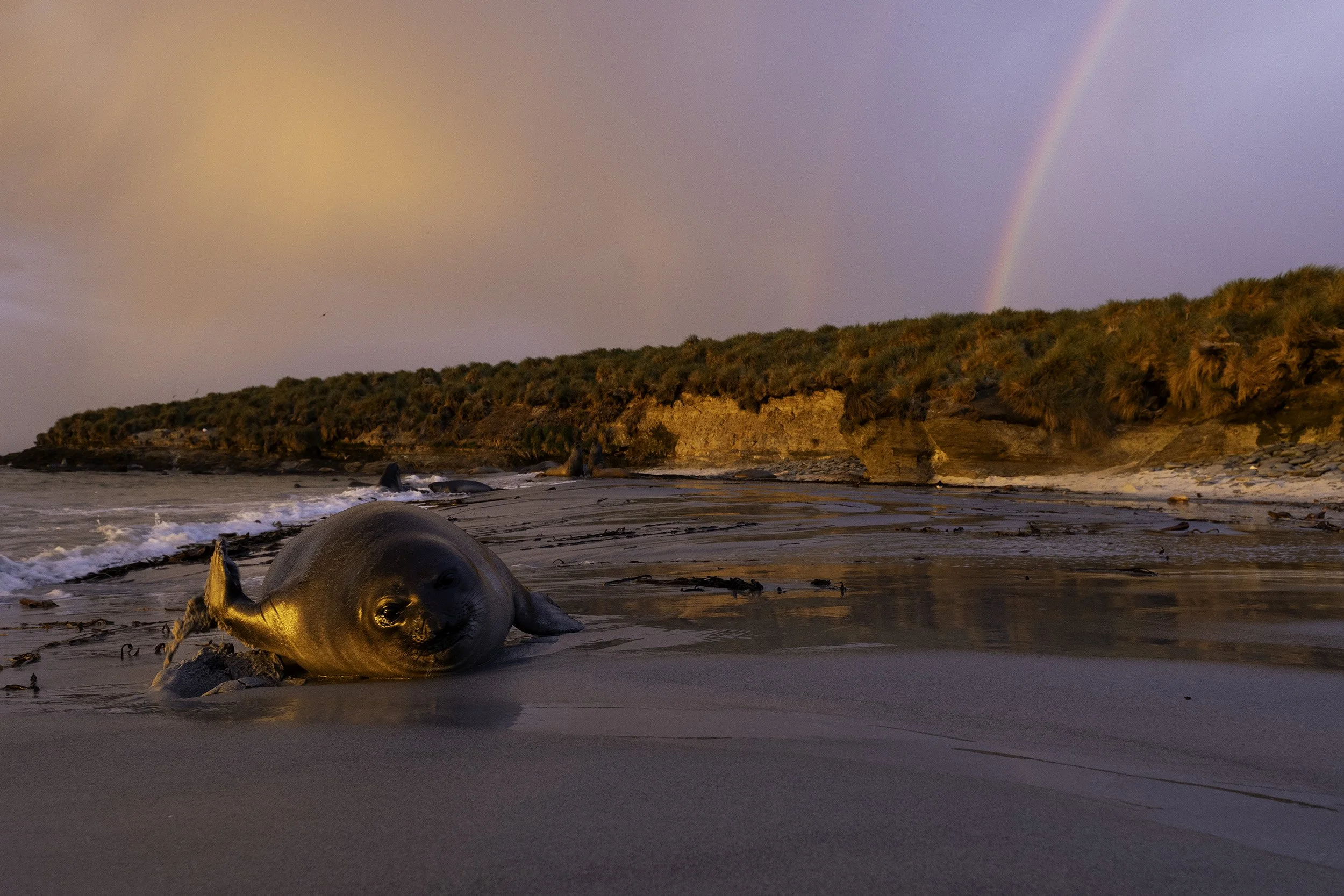
Elephant seal pup sunrise – Sea Lion Island
As a result, morning is the best time to look out for orca too, especially if the tides are half tide or above. This island is famous among photographers and filmmakers for being visited each year by a very clever female, Puma, and her pod. Years ago, Puma worked out that at certain tides she could swim down a shallow channel into one of the elephant seal play pools, and snatch weanlings to feed her offspring. Having spent the best part of three weeks on my shoot watching this one pool from 3am till 10pm, I know her routine well. If you catch her in hunting mode you can see her swimming up and down the channel over and over again, patiently waiting for a weanling to swim within reach, or to be washed off a rock by a rogue wave into her waiting jaws. She particularly targets a little corner shelf of the pool on the east side where the weanlings like to rest. It’s quite a sight to behold orca only a few metres off the shore and definitely worth the early morning wake up! If you’re keen to see the orca, stay for a few days on Sea Lion if you can – Puma has a habit of disappearing for a few days at a time (or more), so more time means more chances to see this amazing behaviour! In 2020 she disappeared for two weeks of my three week shoot – but I quickly forgave her when she returned on the last day of our stay with a new calf – Pepper! This time the orcas evaded us until our very last morning, and right on cue they turned up a few hours before our flight back to Stanley, and I was finally able to show my parents the animals I’d spent so much time observing back on my first shoot.
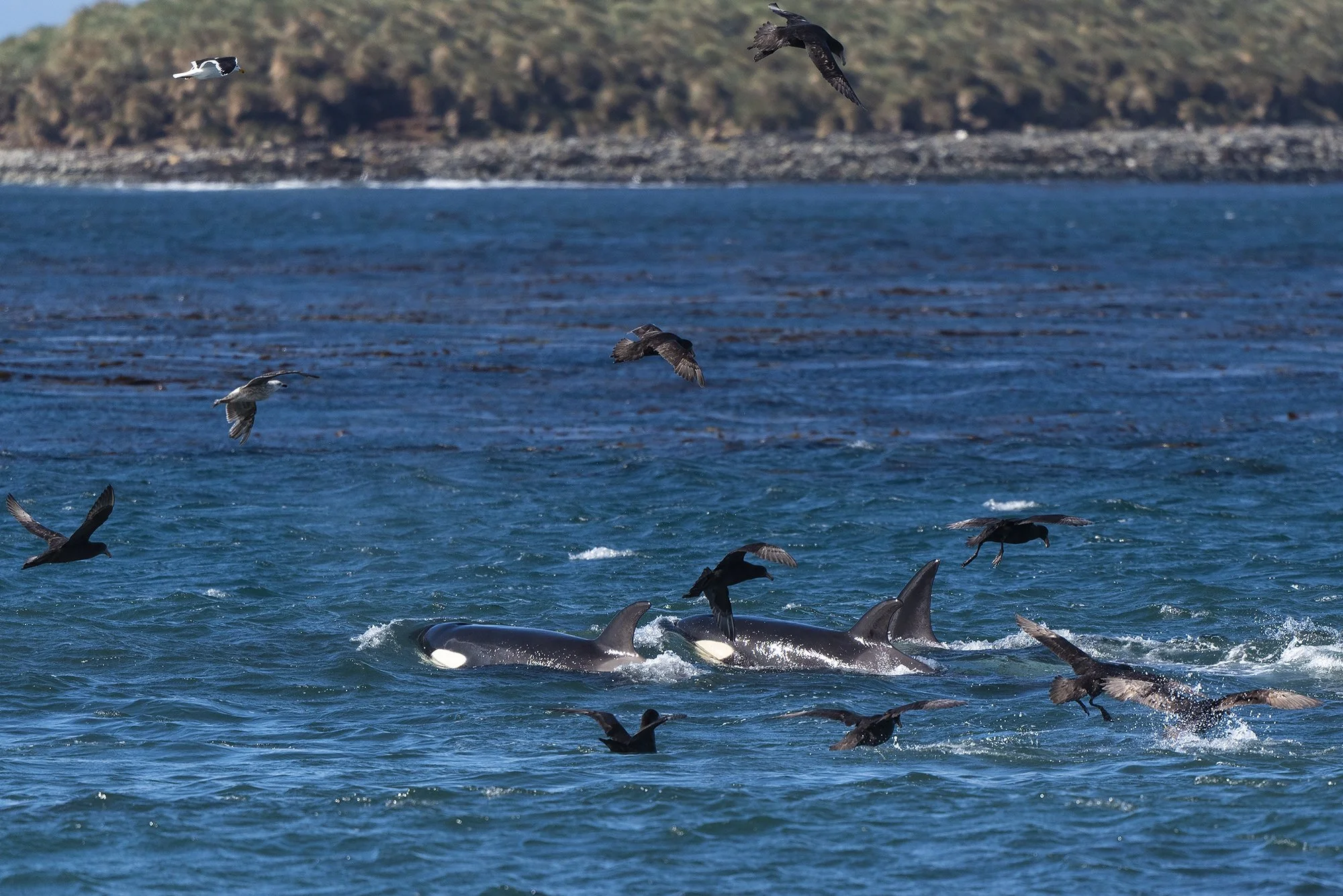
Puma’s pod – Sea Lion Island
Sea Lion has various other incredible spots to visit – at the rockhopper and imperial shag colony on the north you will see the penguins fighting their way through enormous waves and up a steep cliff to return to their nests. The resilience of these little birds against the sheer might of the southern Atlantic is just unbelievable.
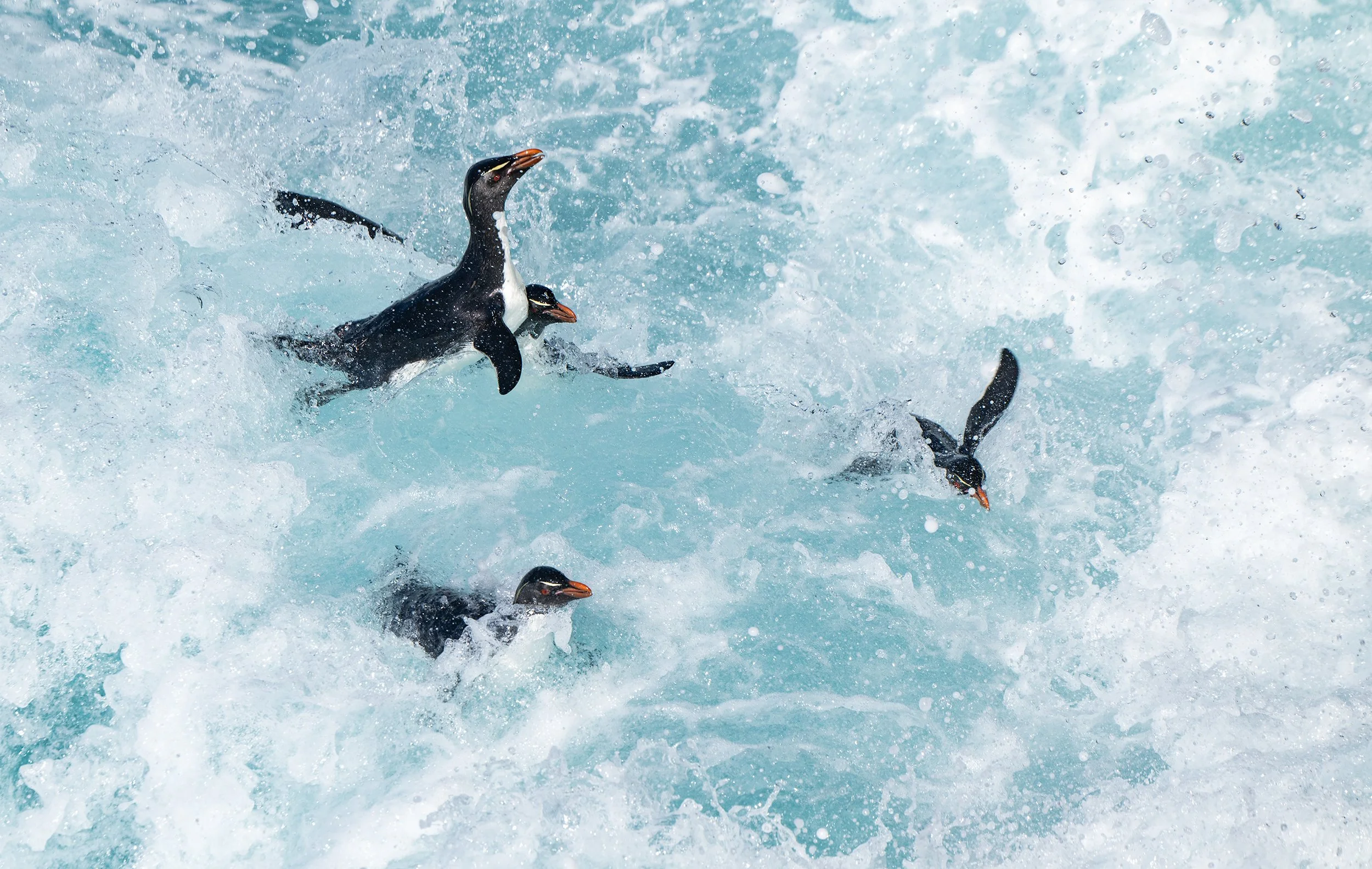
Rockhoppers battling waves – Sea Lion Island
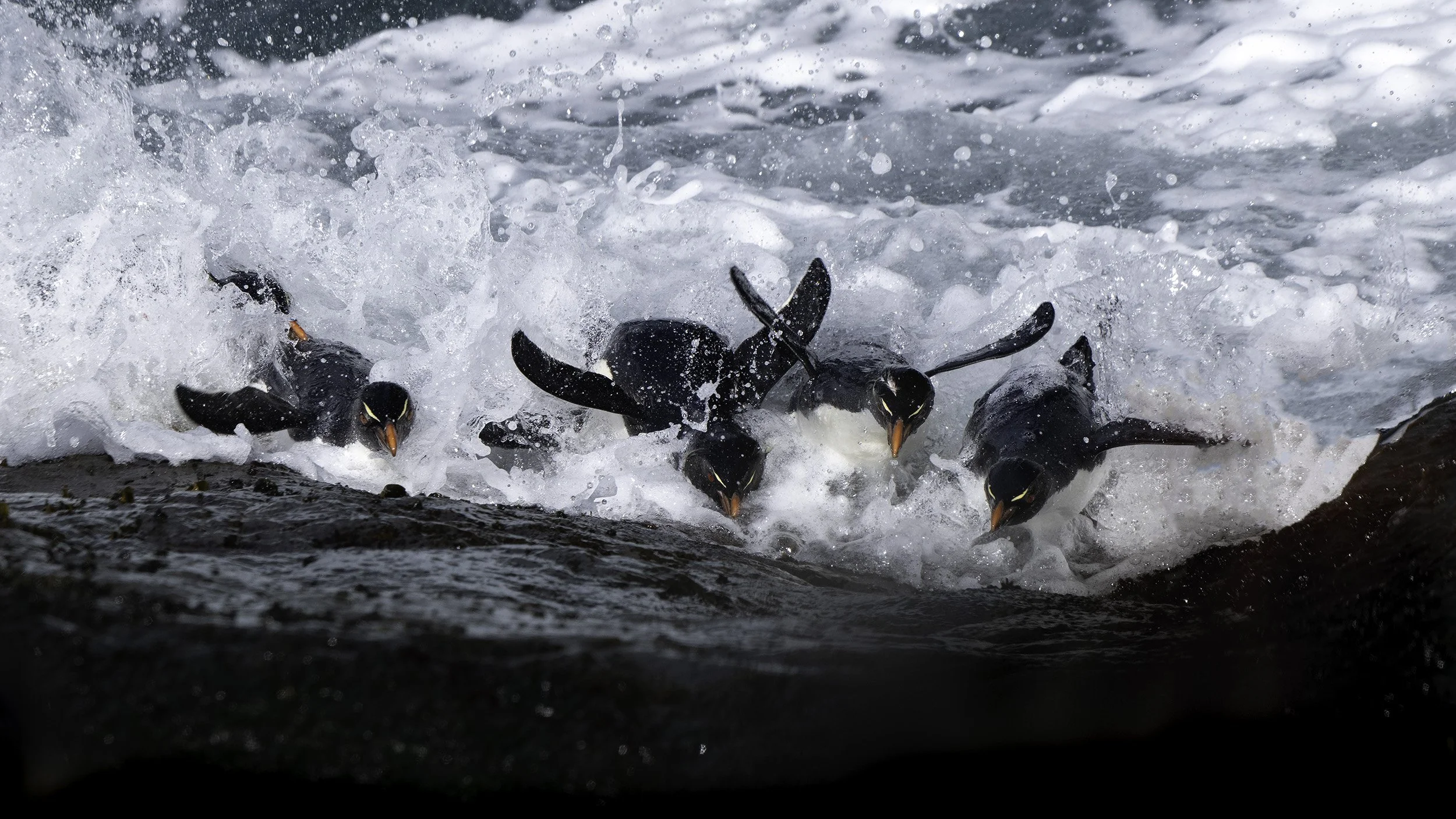
Rockhoppers cliff climbing – Sea Lion Island
We also loved walking around the various ponds and inland back to the lodge where we photographed silvery grebes raising their chicks, Falklands grass wrens, dotterel and snipe.
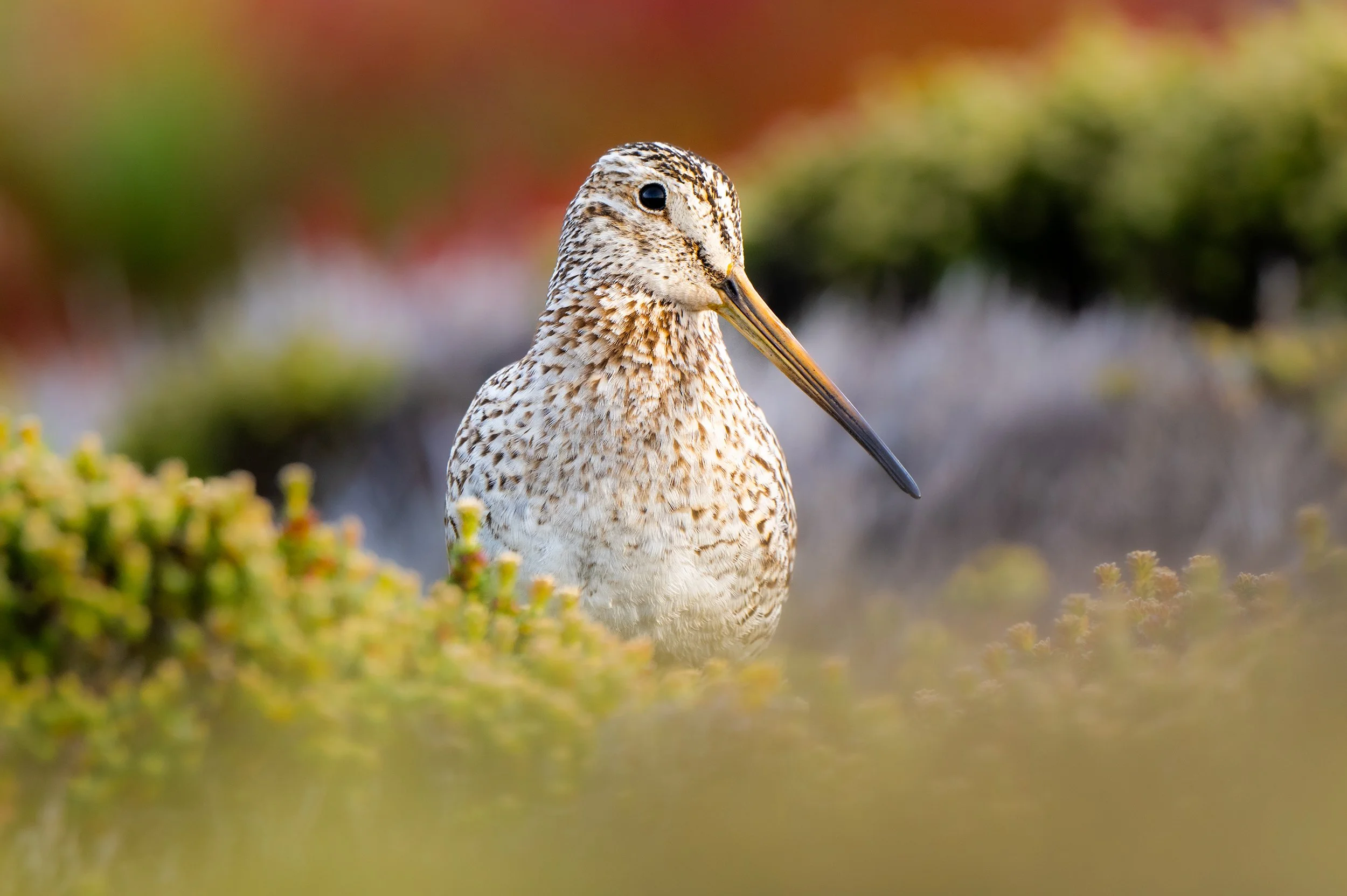
Magellanic snipe – Sea Lion Island
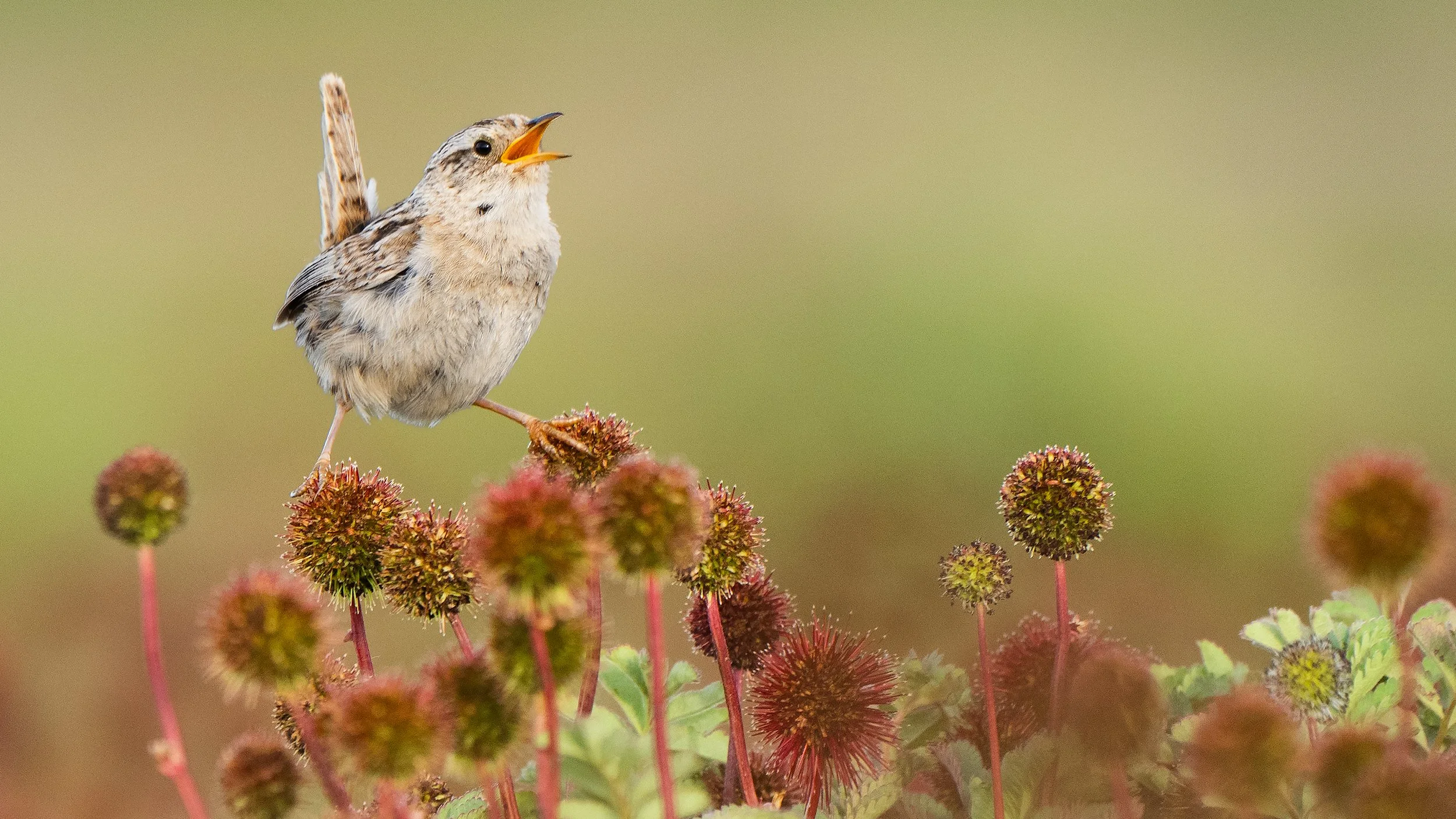
Falklands grassy wren – Sea Lion Island
All in all my second visit to Sea Lion was just as magical as the first, and I still yearn to go back there again. Back to Stanley we went, and our final big wildlife day of the holiday was truly wonderful to say the least. Having been treated to awesome sightings of gentoo, magellanic, rockhopper and macaroni penguins, we were keen to also see the king penguin colony at Volunteer Point. There was no space at the accommodation there, so we signed up to a rather mad plan to be picked up at 1am from Malvina House and drive there in time for sunrise. The journey is a long one, with a lot of dodgy off-roading in the dark. But the lack of road there has kept this site fairly remote and the colony protected from too many visitors. Let me just say it was one of the most breathtaking wildlife scenes of my life – kings and gentoos making their way down to the sea for their day’s fishing and gathering on an epic beach lit by the rising sun.
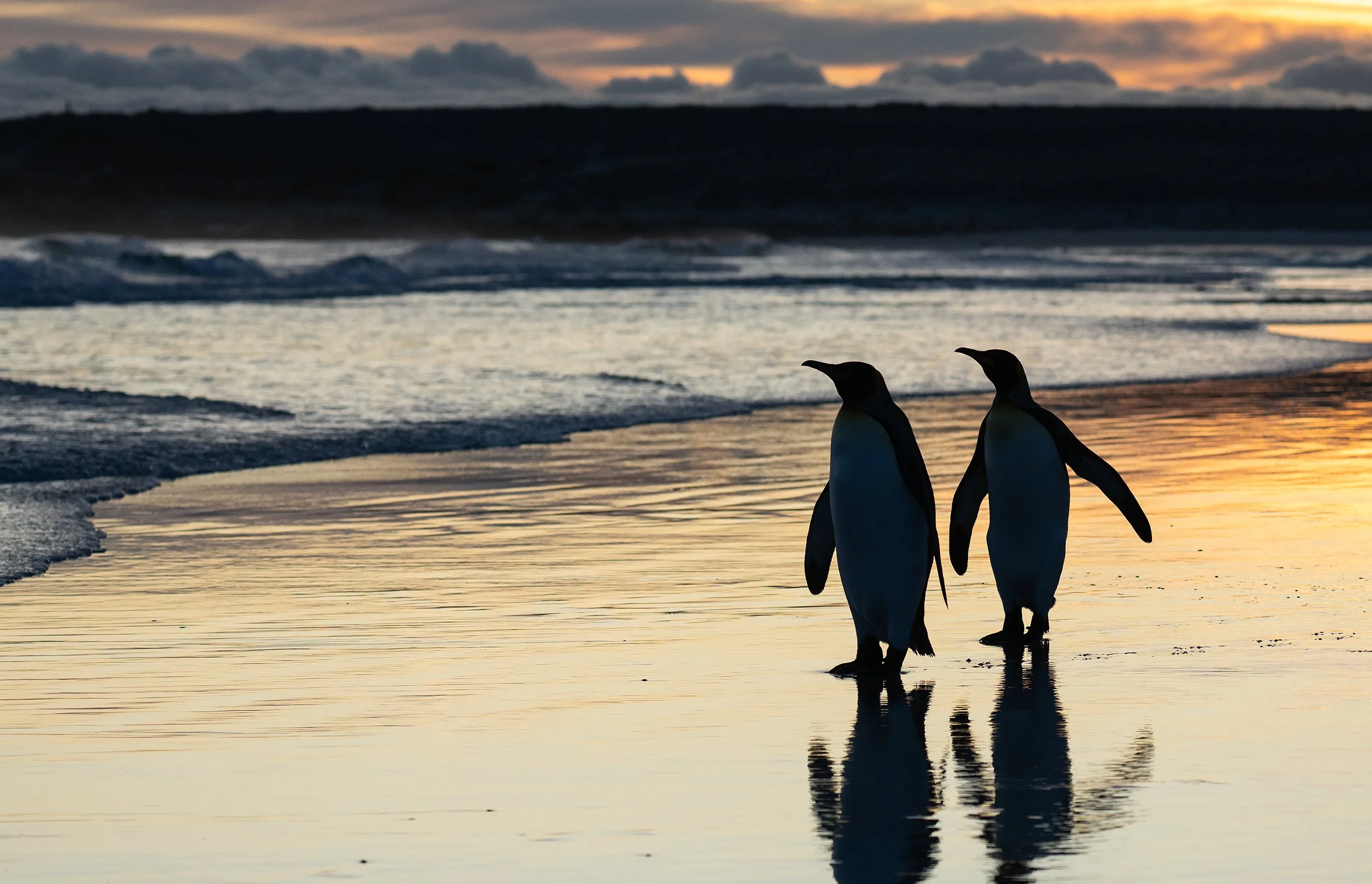
Sunrise stroll – Volunteer Point
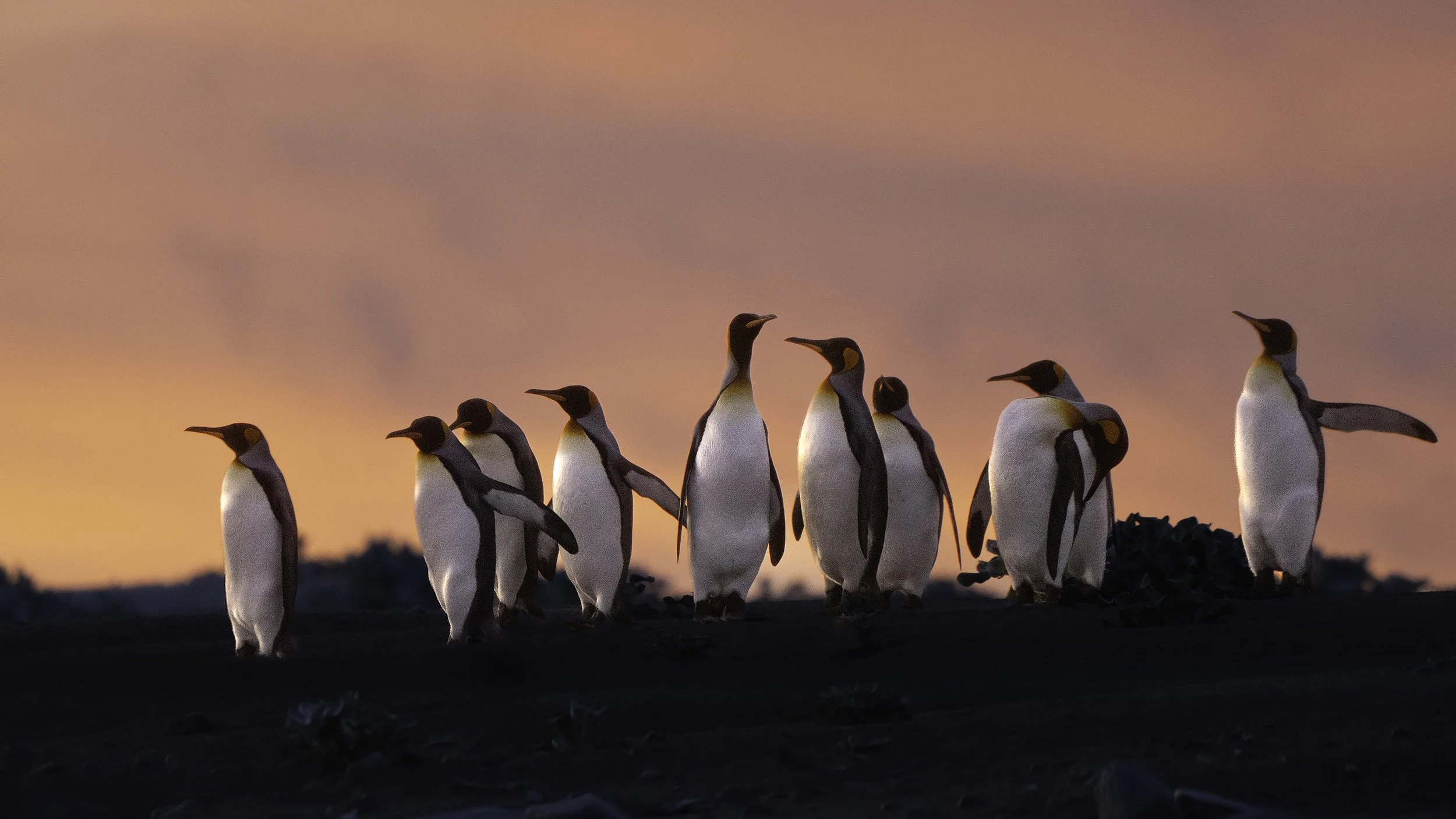
King penguin sunrise – Volunteer Point
Whether it’s stormy or sunny the light can be magnificent and the skies are huge there. Falkland Island Holidays were fantastic once again, managing to rearrange our visit around the cruise ship schedule, so once again we ended up alone, just the three of us, with the colony.
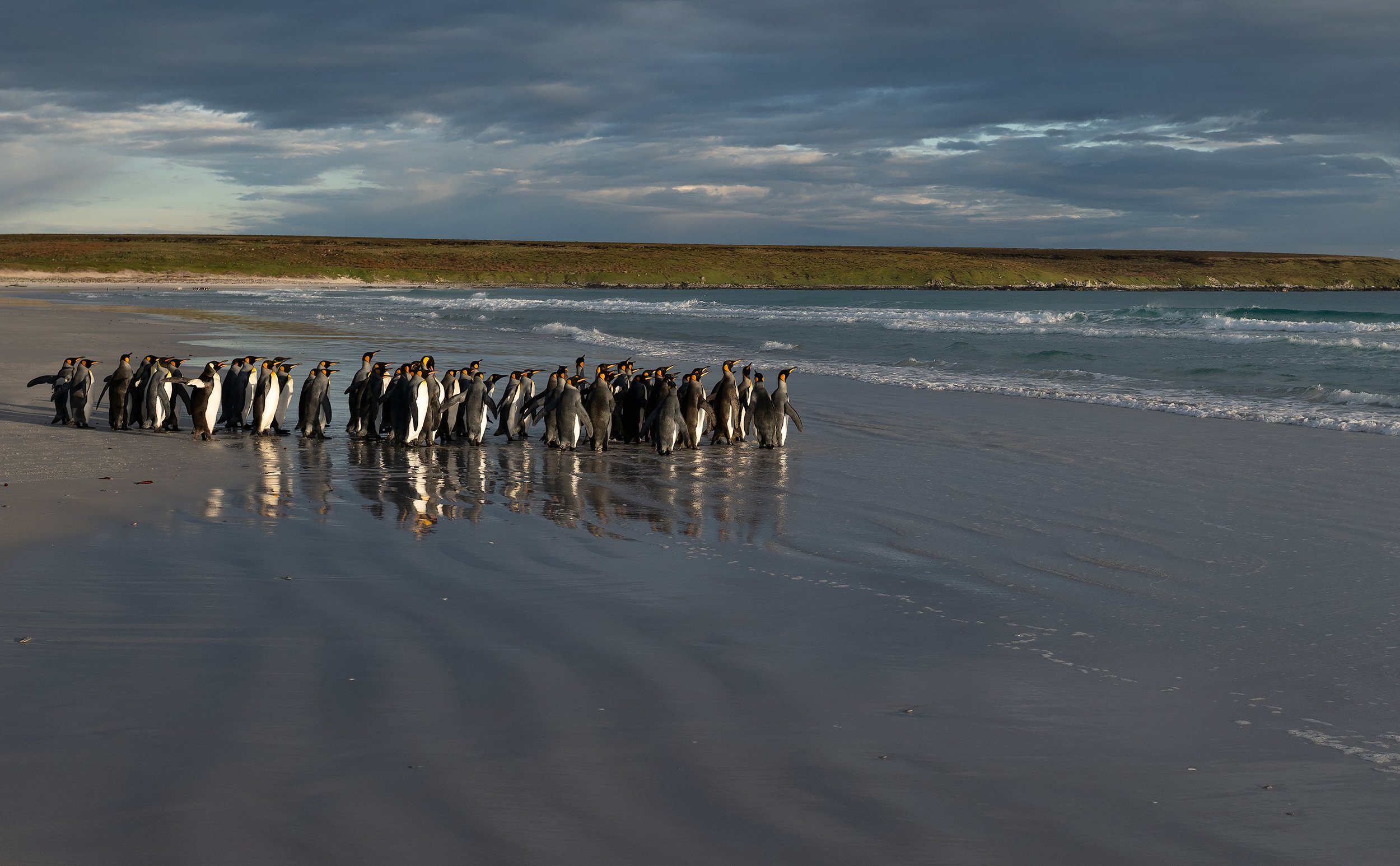
King penguins – Volunteer Point
Some days at Volunteer Point there’s a bull sea lion who has taken a liking to king penguin for breakfast – an awesome piece of nature to watch play out – but I was pretty happy that the day we visited he wasn’t there, and the kings were left in peace.
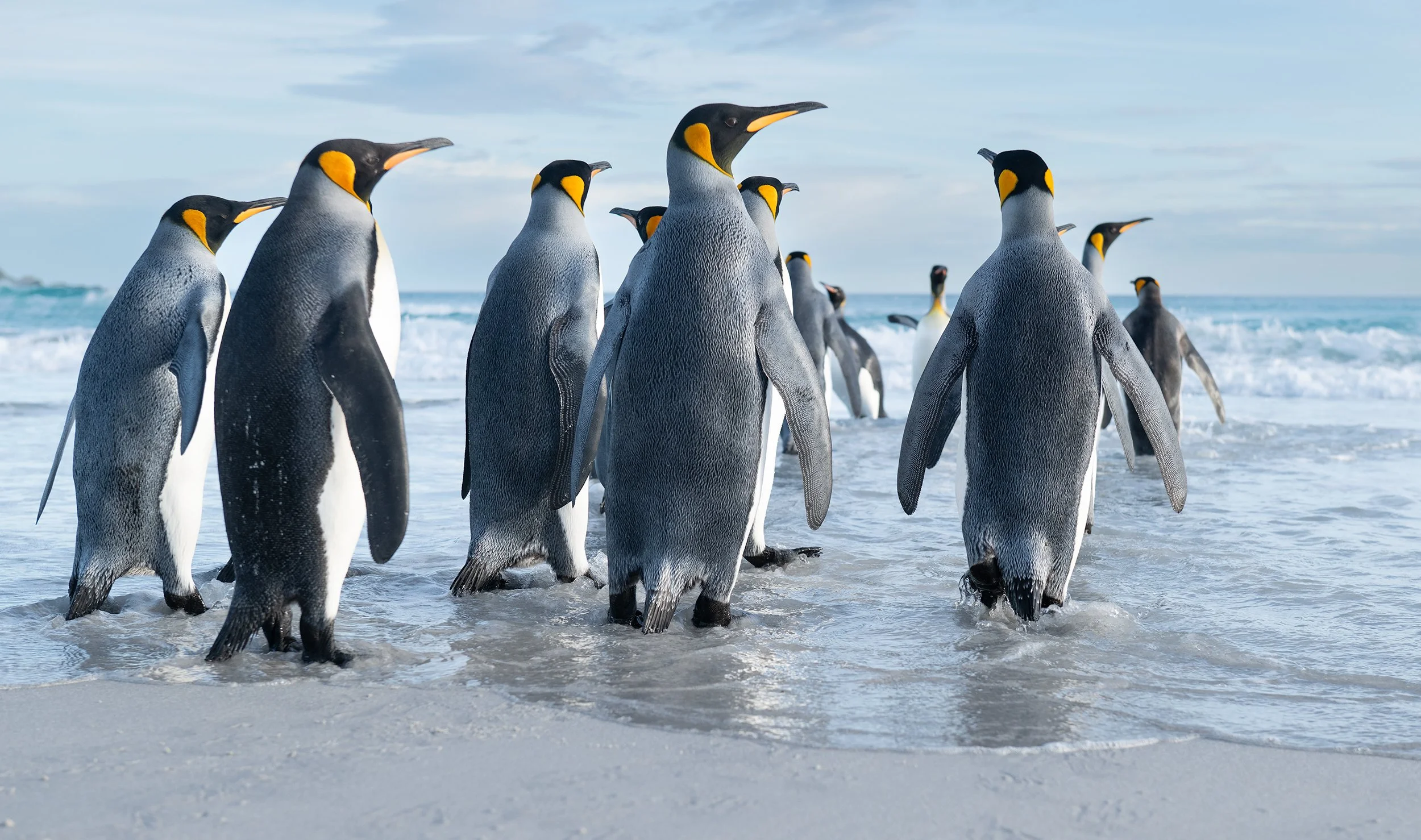
Off fishing – Volunteer Point
Our trip had come to an end, our cup full to the brim with countless wonderful wildlife encounters, and our memory cards full of photos – some of the best we’d taken so far. My parents agreed, the Falklands is a very special place – warm, kind people, stunning landscapes and light, and an amazing diversity and abundance of wildlife. Nowhere is ‘untouched’ in the world, but here it feels like people are living with the wildlife not apart from it, and tourism is limited and carefully managed. It feels wild. Never have I had such freedom to explore and so much time to spend with the wildlife and getting different shots. The weather is changeable but this creates variety in your images, and when it gives the light is unrivalled.
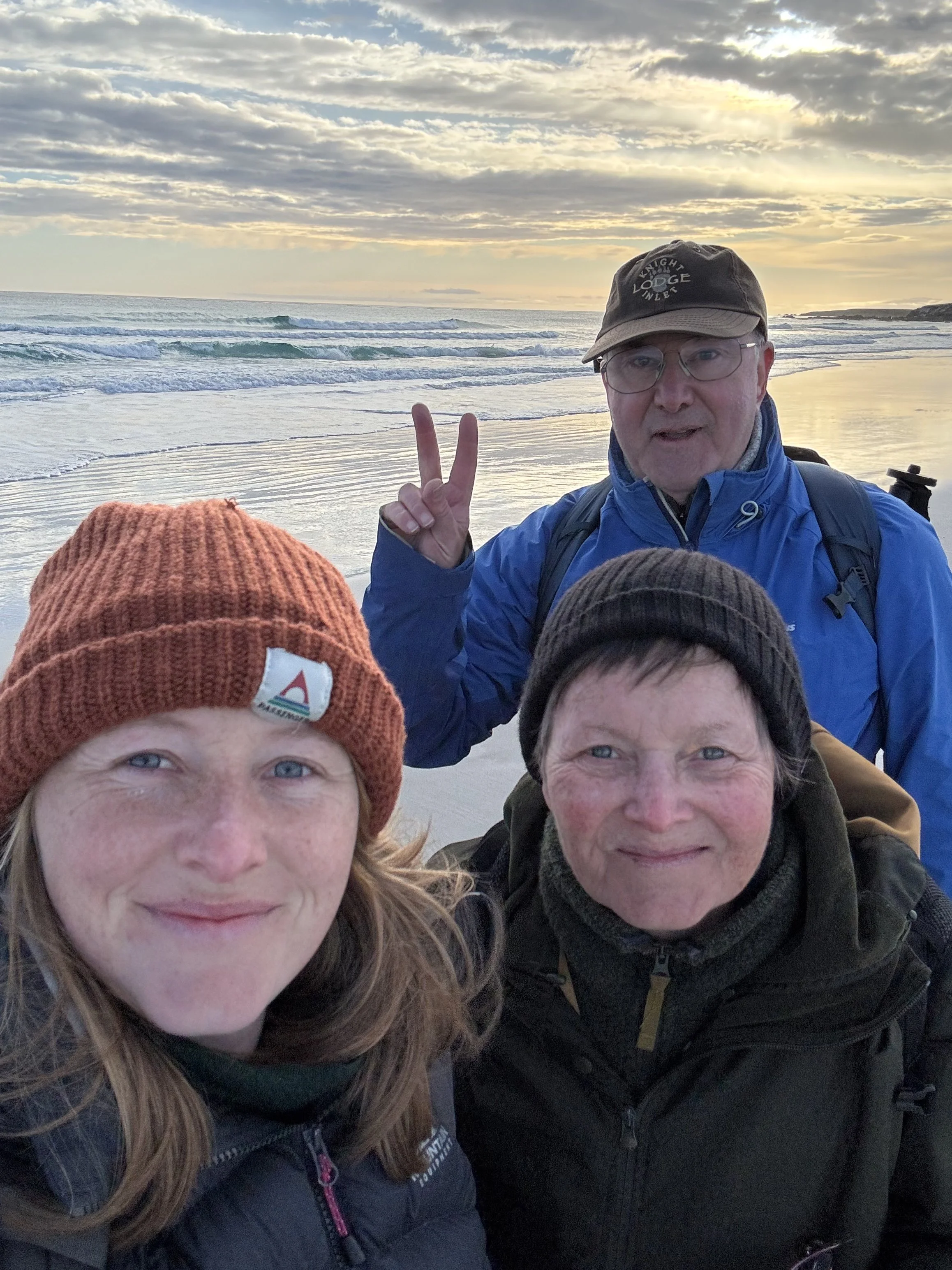
Last day – Volunteer Point
Hopefully the Falklands is now on your wildlife photography bucket list! It’s still on mine – with things booking up quickly, we didn’t get the chance to visit the albatross colonies and there are so many more islands I want to visit (Steeple Jason, Carcass, Saunders). If you have any questions about our trip or planning your own, don’t hesitate to ask me, or get in touch with Falkland Island Holidays to arrange your dream trip!
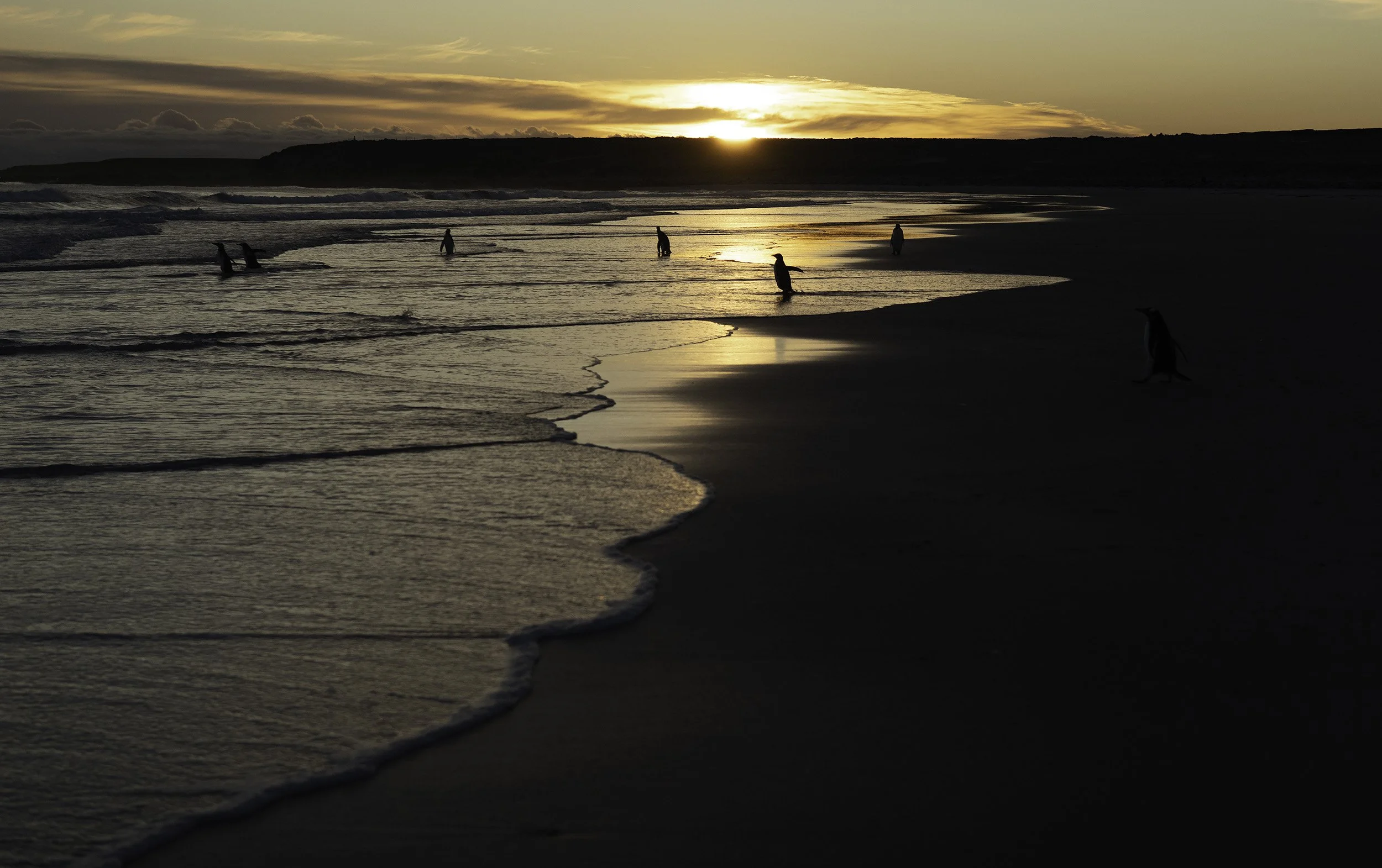
Sunrise – Volunteer Point